
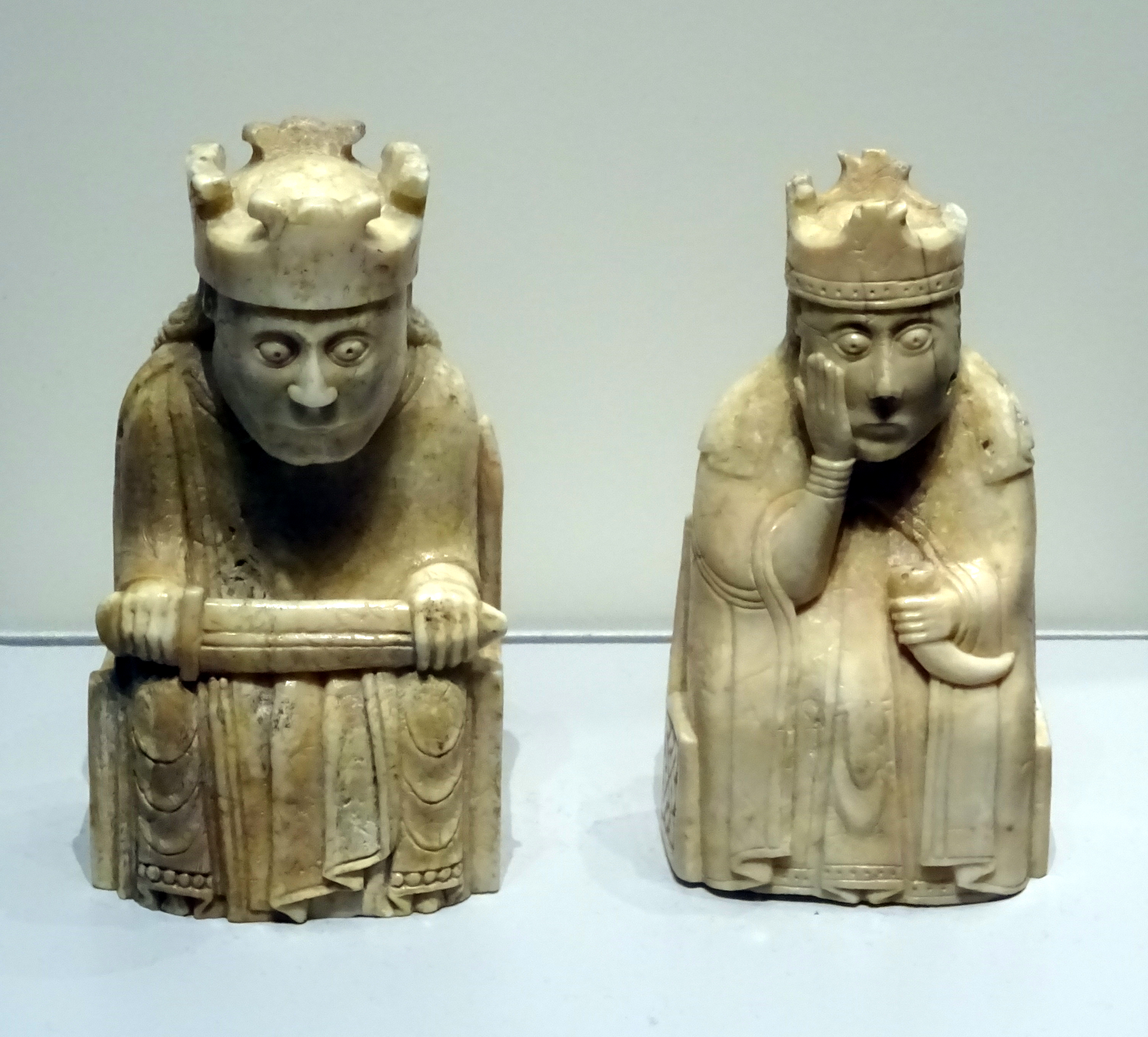
Also known as the UIG chessmen, these pieces date back to the 12th Century.
https://en.wikipedia.org/wiki/Lewis_chessmen
The Mystery of the Sands: The 12th-Century Lewis Chessmen
In 1831, a hoard emerged from a sandbank on the Isle of Lewis in the Outer Hebrides of Scotland that would change our understanding of medieval gaming and artistry.
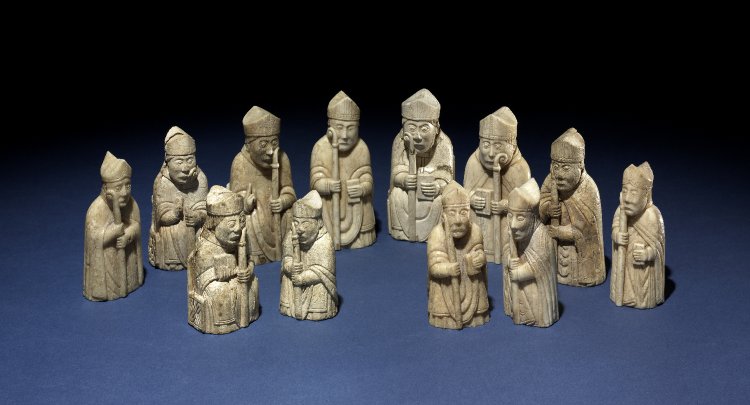
The Lewis Chessmen are perhaps the most famous chess pieces in the world. Comprising 93 artifacts (mostly chess pieces, but also some other gaming counters), the hoard dates back to the late 12th or early 13th century.
The Norse Connection While found in Scotland, analysis suggests they were carved in Trondheim, Norway. During this period, the Outer Hebrides were under Norse rule. The pieces are intricately carved from walrus ivory and sperm whale tooth, materials highly valued in the medieval trade networks.
A Window into the Medieval Mind Beyond their age, the pieces are beloved for their distinct human characteristics. Unlike abstract modern pieces, these are caricatures of medieval society. The Kings are seated with swords across their knees; Bishops are robed and contemplative; Knights are mounted on diminutive horses.
Most famous are the Rooks—depicted as fierce Norse “berserkers” biting their shields—and the Queens, who hold their hands to their faces in a gesture of contemplation or dismay.
Today, the hoard is divided between the British Museum in London and the National Museum of Scotland in Edinburgh. They remain a stunning testament to the craftsmanship and complex cultural connections of the Viking Age.
#History #Archaeology #MedievalStudies #VikingAge #Art andCulture #Museums
