
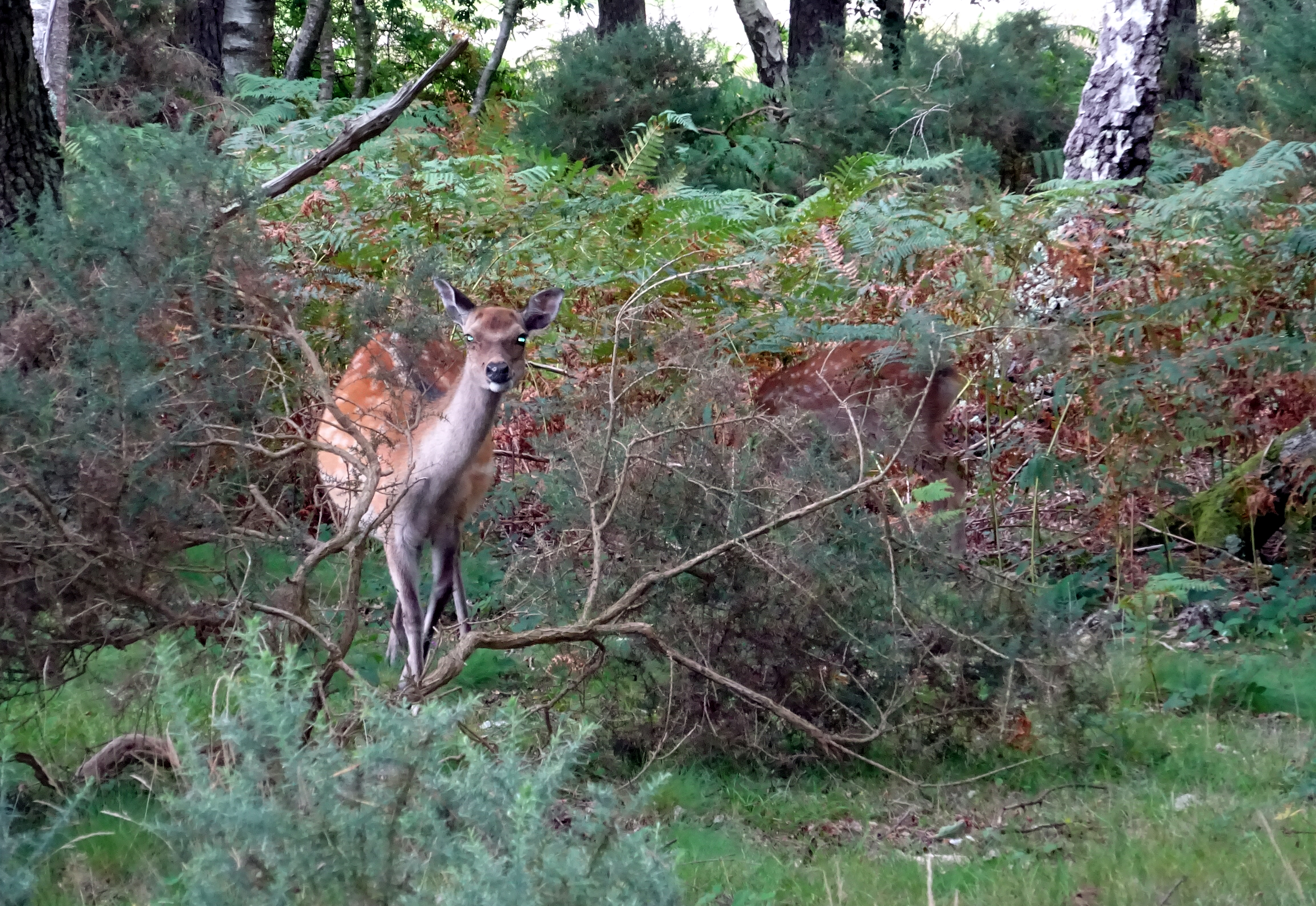
The fallow deer (Dama dama) is a medium-sized deer species known for its typically spotted coat, white rump patch outlined in black, and broad, palmate (shovel-shaped) antlers on the males (bucks).
Fallow deer are native to Europe and Anatolia, but have been widely introduced across the world, including the UK, North America, and Australia, and are considered a naturalised, widespread species in many of these regions.
Key Characteristics
- Size: They are medium-sized deer; adult males (bucks) weigh 46–93 kg, and females (does) weigh 35–56 kg.
- Appearance: The coat color is highly variable, with four main variations:
- Common: Chestnut-brown with white spots in summer, becoming a duller grey-brown in winter.
- Menil: Paler tan color with white spots that are visible all year.
- Melanistic: Almost entirely black or dark chocolate brown with no spots.
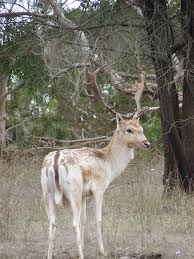
- White: A genuine color variation, not albino, appearing almost entirely white.
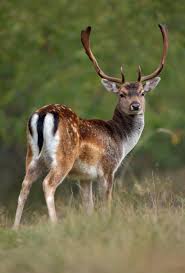
They all share a distinctive white rump patch with a black, horseshoe-shaped border and a long tail with a black stripe down the middle.
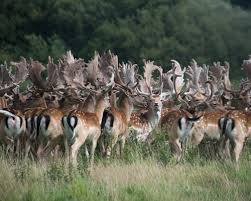
- Antlers: Only bucks have antlers, which are broad and flattened (palmate) in mature individuals and are shed and regrown annually.
- Habitat: They are adaptable and thrive in broadleaved or mixed woodlands with open clearings and parklands.
Behaviour and Diet
Fallow deer are social animals, typically living in herds, though outside the breeding season (rut), bucks often form separate bachelor groups. They are active throughout the day, but peak activity occurs at dawn and dusk.
Their diet is flexible, consisting mainly of:
- Grasses and herbs.
- Leaves, bark, and young tree shoots.
- Nuts, berries, and fungi in the autumn and winter.
Reproduction
The breeding season, known as the rut, occurs in October and November. During this time, bucks establish and defend “rutting stands” (territories) by thrashing foliage and calling loudly with groans or belly belches to attract and mate with does. After a gestation period of around 230 days, a single fawn is typically born in June or July.
Status and Management
While not native to the UK, fallow deer have been present for over 1,000 years and are now naturalised and widespread, making them the most common deer in England. However, in some areas, their high populations can cause damage to forestry and agriculture, necessitating careful population management. They are also a common cause of deer-vehicle collisions.
