
* Report generated using Gemini AI
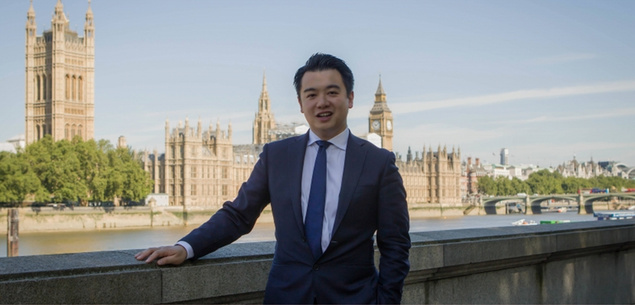
Comprehensive Strategic Profile and Legislative Analysis: Alan Mak, Member of Parliament for Havant
Executive Summary
Alan Mak, the Member of Parliament for Havant since 2015, occupies a unique and often complex position within the contemporary Conservative Party. As the first individual of ethnic Chinese heritage elected to the House of Commons, his career offers a significant case study in the intersection of meritocratic social mobility, technocratic conservatism, and the evolving demographics of British political representation. However, Mak has systematically rejected the label of an identity politician, preferring to craft a persona grounded in “One Nation” Toryism, economic liberalism, and a distinct focus on future-facing technology policy, specifically the Fourth Industrial Revolution (4IR).
This exhaustive report, current as of January 2026, provides a granular analysis of Mak’s parliamentary career, legislative achievements, voting behavior, and constituency advocacy. It draws upon Hansard records, voting data, financial disclosures, and policy publications to construct a definitive account of his tenure.
The analysis reveals a politician defined by three distinct phases: the ambitious backbencher (2015–2021) who carved out a niche in technology and health reform; the loyal government operator (2021–2024) who served in Whips’ offices and junior ministerial roles during a period of intense party volatility; and the constituency-focused survivor (2024–Present) who, following a near-defeat in the 2024 General Election, retreated from the Shadow Cabinet to fortify his local base against the rise of Reform UK and a resurgent Labour Party.
Key findings indicate that while Mak currently chairs no All-Party Parliamentary Groups (APPGs)—having stepped down from his founding role in the 4IR APPG upon entering government—his influence on the party’s digital strategy remains substantial. His legislative legacy is anchored in the NHS Reserve Staff Act and the successful campaign to ban fax machines in the NHS, marking him as a politician capable of translating specific, technocratic grievances into statute. Conversely, his voting record displays a rigid adherence to the party whip on macroeconomic and social welfare issues, often placing him at odds with progressive critiques regarding local government funding and environmental regulation—tensions that are now manifesting acutely in local battles over the Havant Thicket Reservoir.
1. Origins, Education, and Ideological Formation
1.1 The “British Dream” Narrative
Alan Mak’s personal history is foundational to his political identity, frequently deployed in speeches and literature to validate his commitment to free enterprise and aspiration. Born in York on November 19, 1983, Mak is the son of parents of Cantonese descent who fled the instability of the Cultural Revolution era and dictatorship to settle initially in Hong Kong and subsequently in the United Kingdom.1
This migration story forms the core of Mak’s ideological framework. He frequently frames his family’s experience as a testament to the “British Dream”—a concept he defines through the lens of hard work, rule of law, and opportunity.2 His parents established and operated a small Chinese takeaway shop in York, a business that ran for over two decades. Mak’s upbringing in the living quarters above this shop is cited as the crucible of his economic worldview.3 In his own words, “living above the shop” was not merely a logistical arrangement but an education in the realities of the private sector: the direct correlation between effort and reward, the burden of taxation, and the necessity of self-reliance.4
1.2 Educational Meritocracy and the Assisted Places Scheme
If the takeaway shop provided his economic education, his formal schooling provided his entry into the British establishment. Mak attended Queen Anne Comprehensive School in York until the age of 13. His trajectory shifted dramatically when he secured a scholarship to St Peter’s School, York, through the Assisted Places Scheme—a flagship policy of the Thatcher government designed to allow gifted children from lower-income backgrounds to attend private schools.1
The abolition of the Assisted Places Scheme by the New Labour government in 1997 is often highlighted by Mak as a policy failure that pulled the ladder up behind him, reinforcing his support for selective education and rigorous academic standards. This experience at St Peter’s propelled him to Peterhouse, the oldest and traditionally one of the most conservative colleges at Cambridge University. There, he read Law and distinguished himself academically, winning the ECS Wade Prize for Administrative Law.1
His education continued at the University of Oxford, where he completed a post-graduate diploma in Law and Business, finishing as a runner-up for the Oxford Leadership Prize.4 This dual exposure to Oxford and Cambridge, combined with his background, cemented a worldview that blends a belief in elite excellence with a narrative of accessibility for the talented regardless of origin.
1.3 Legal Career and Civic Leadership
Prior to his election, Mak followed a high-trajectory corporate path. He qualified as a solicitor with Clifford Chance, one of the prestigious “Magic Circle” law firms in the City of London.1 His legal practice focused on corporate finance and commercial deals, equipping him with a technical literacy in markets and regulation that would later inform his work on the Treasury Select Committee and as Exchequer Secretary.
However, conscious of the need to broaden his profile beyond that of a corporate lawyer, Mak invested heavily in the third sector. He served for over five years as a trustee and President of Magic Breakfast, a charity providing healthy breakfasts to children in disadvantaged schools.1 His tenure notably coincided with the charity receiving a Big Society Award from Prime Minister David Cameron in 2011.5 This involvement served multiple political purposes: it demonstrated “compassionate conservatism,” aligned him with the Cameron modernization project, and provided a counter-narrative to the stereotype of the unfeeling corporate lawyer.
Further burnishing his civic credentials, Mak was a torchbearer for the London 2012 Olympics, carrying the flame through Bedale in North Yorkshire.1 He was also engaged with the Royal British Legion and various sports clubs in administrative capacities, establishing a track record of community service that would become a central pillar of his constituency campaigning.4
2. Electoral History and the Battle for Havant
The constituency of Havant, located in Hampshire on the south coast, had long been a Conservative fortress, represented previously by the intellectual heavyweight David Willetts. Mak’s selection and subsequent electoral performance offer critical insights into the shifting dynamics of the Conservative vote in the south of England.
2.1 The 2015 Breakthrough
Mak’s selection for Havant was a significant moment in British political history. Upon his election on May 7, 2015, he became the first person of Chinese ethnic origin to sit in the House of Commons.1 He secured the seat with 23,159 votes (51.7%), a majority of 13,920 over the UKIP candidate, reflecting the strong eurosceptic undercurrent in the constituency even at that time.
Despite the historic nature of his victory, Mak immediately moved to neutralize his ethnicity as a political defining feature. In an interview with the South China Morning Post, he stated explicitly: “I am not standing for the Chinese population of Britain. I am standing for the people of Havant and my country”.1 He expressed discomfort with the attention his ethnicity received, criticizing stories that framed him as a representative for “every Chinese, Thai, Vietnamese and Korean” person.1 This rejection of identity politics has been a consistent feature of his career.
2.2 The Brexit Years: 2017 and 2019
Mak’s electoral position strengthened during the intense polarization of the Brexit era, despite his personal vote to Remain in the 2016 referendum—a decision he later characterized as a personal judgment that he subsequently set aside to respect the democratic mandate.3
- 2017 General Election: In an election where the Conservative majority collapsed nationally, Mak increased his vote share in Havant to 59.8%, with a majority of 15,956.1
- 2019 General Election: The 2019 election represented the high-water mark of Mak’s electoral appeal. Running on the “Get Brexit Done” manifesto, he secured 30,051 votes, a staggering 65.4% of the vote share, and a majority of 21,792.1 This result cemented Havant as an ultra-safe seat, seemingly insulating Mak from national political volatility.
2.3 The 2024 Near-Death Experience
The General Election of July 4, 2024, shattered the illusion of safety. Amidst a national collapse in Conservative support, Mak retained his seat by the narrowest of margins, surviving a substantial swing to Labour and Reform UK.
Table 1: Havant Constituency Results (2024 General Election)
| Party | Candidate | Votes | Vote Share (%) | Change (%) |
| Conservative | Alan Mak | 12,986 | 30.8% | -34.6% |
| Labour | Stefanie Harvey | 12,894 | 30.6% | +12.6% |
| Reform UK | John Perry | 9,959 | 23.6% | +23.6% |
| Liberal Democrat | Gayathri Sathyanath | 3,275 | 7.8% | -4.7% |
| Green Party | Netty Shepherd | 2,861 | 6.8% | +3.3% |
| Workers Party | Jennifer Alemanno | 211 | 0.5% | +0.5% |
Source: 6
The collapse of his vote share by nearly 35 points and the reduction of his majority to just 92 votes has fundamentally altered his political calculus.6 The surge of Reform UK (23.6%) indicates a significant portion of his 2019 coalition defected to the populist right, while Labour came within striking distance of taking the seat. This result explains his subsequent resignation from the Shadow Cabinet in 2025 to focus exclusively on local issues; for a politician with a majority of 92, every hour spent on national opposition duties is a liability.
3. Parliamentary Career: From Backbench Innovator to Frontbench Loyalist
Mak’s parliamentary career can be segmented into distinct phases, each characterized by a different strategic focus.
3.1 The Ambitious Backbencher (2015–2021)
Upon entering Parliament, Mak sought to distinguish himself not through traditional rebellion but through policy specialization. He quickly identified a gap in the parliamentary market: technology policy and the Fourth Industrial Revolution (4IR).
- Committee Work: He served on the Procedure Committee (2015–2016), a standard role for new MPs, before moving to the Public Accounts Commission (2020–2021).7
- The 4IR APPG: In 2016, Mak founded the All-Party Parliamentary Group on the Fourth Industrial Revolution. This was a strategic masterstroke, allowing him to chair a platform that brought tech leaders, academics, and policymakers together. It positioned him as a thought leader on the economy of the future.8 Note: While he founded and chaired this group, snippets confirm he holds no APPG officer roles as of 2026 9, having stepped down upon entering government.
- Policy Papers: He authored reports for the Centre for Policy Studies (CPS), most notably “Masters of the Revolution” and “Powerful Patients, Paperless Systems,” which advocated for digital adoption in industry and healthcare.10
3.2 The Government Payroll (2021–2024)
Mak’s loyalty to the leadership—sometimes lampooned by sketch writers like Quentin Letts as sycophantic 1—was rewarded with steady promotion.
- Government Whip (April 2021 – July 2022): Appointed as a Lord Commissioner of HM Treasury, Mak acted as a whip for the Ministry of Defence. This role requires strict adherence to the party line and enforcing discipline among colleagues.1
- Exchequer Secretary to the Treasury (July – September 2022): Mak served in this junior ministerial role during the caretaker government of Boris Johnson. His portfolio included taxation and duties, where he notably responded to debates on alcohol duty reform.1
- The Truss/Sunak Interlude: He returned to the backbenches during the short-lived Truss administration but remained active on legislative committees, including the Financial Services and Markets Bill Committee.7
- Minister for Industry and Economic Security (March – July 2024): In the final months of the Conservative government, Mak was appointed Parliamentary Under-Secretary of State, a joint role between the Department for Business and Trade and the Cabinet Office. He oversaw the Investment Security Unit (ISU), a critical body responsible for screening foreign direct investment for national security risks under the National Security and Investment Act.1 This role placed him at the heart of the UK’s economic decoupling strategies, particularly regarding sensitive technologies and Chinese investment.
3.3 Shadow Cabinet and Resignation (2024–2025)
Following the 2024 defeat, Mak remained a central figure in the opposition.
- Shadow Economic Secretary (July – November 2024): He shadowed the Treasury, critiquing Labour’s early financial moves.1
- Shadow Science, Innovation and Technology Secretary (November 2024 – July 2025): Appointed by Kemi Badenoch, Mak led the opposition’s scrutiny of the Department for Science, Innovation and Technology (DSIT). He was aggressive in attacking Labour’s “jobs tax” (National Insurance rise) and their handling of the Exascale supercomputer project.12
The Resignation: On July 22, 2025, Mak resigned from the Shadow Cabinet. In his public statement, he cited the need to “focus on constituency matters”.13 While he claimed this was despite an offer of an alternative role, the strategic imperative is clear: with a 92-vote majority, his political survival depends entirely on visible local delivery, not national opposition spokesmanship.
4. The Fourth Industrial Revolution (4IR): Policy and Thought Leadership
One of the original requirements of this report was to detail the cross-party groups Mak chairs and their policies. While he currently chairs none, his foundational work with the APPG on the Fourth Industrial Revolution remains the intellectual bedrock of his career.
4.1 “Masters of the Revolution”
Mak’s defining policy contribution is the report Masters of the Revolution, published by the Centre for Policy Studies. This document articulated a comprehensive strategy for post-Brexit Britain to lead in advanced technologies. The report outlined 20 specific recommendations 10, the philosophy of which can be categorized as follows:
Table 2: Key Policy Pillars of Mak’s 4IR Strategy
| Strategic Pillar | Core Policy Proposal | Rationale |
| Innovation Infrastructure | Establish “4IR Research Centres” focused on robotics, vaccines, and AI. | To create physical hubs of excellence that attract global talent and capital. |
| Regional Levelling Up | Create regional investment funds to back tech entrepreneurs outside London. | To prevent the digital economy from exacerbating regional wealth inequality. |
| Skills & Education | Mandate lifelong skills training and coding in schools. | To prepare the workforce for automation and prevent structural unemployment. |
| Regulatory Divergence | Move away from the EU’s “Precautionary Principle” towards a pro-innovation model. | To use post-Brexit regulatory freedom to attract high-risk, high-reward tech trials (e.g., GMOs, autonomous vehicles). |
| Digital Infrastructure | Accelerate full-fibre broadband rollout to 100% of premises. | To ensure the “plumbing” of the digital economy is universal. |
Mak argued that the 4IR—defined by the fusion of physical, digital, and biological technologies—offered Britain a “once-in-a-generation opportunity” to reindustrialize through high-tech manufacturing.10
4.2 Legislative Impact of 4IR Work
Mak’s advocacy was not limited to reports. He used his position to influence government policy on:
- The Industrial Strategy: Lobbying for specific sector deals in AI and Life Sciences.
- Tax Incentives: Consistently voting for and advocating for R&D tax credits and the “Super Deduction” for capital investment.15
- Recent Activity (2025): Even from the opposition benches, Mak has continued this focus. In debates on the AI Opportunities Action Plan (January 2025), he critiqued the Labour government for delaying the publication of the plan and for failing to allocate new funding to the AI Research Resource.12 He accused the government of “analogue government in a digital age,” arguing that their reliance on “mission delivery boards” and quangos would stifle the agility needed for the tech sector.16
5. The NHS Reformer: Fax Machines and Reservists
While the 4IR work established his intellectual brand, Mak’s work on the NHS demonstrated his ability to navigate the legislative machinery of Parliament to achieve tangible outcomes.
5.1 The “Paperless Systems” Campaign
In 2018, Mak authored Powerful Patients, Paperless Systems, a report highlighting the technological archaism of the NHS. He famously publicized the fact that the NHS was the world’s largest purchaser of fax machines.11
- The Mechanism: He introduced the NHS (Prohibition of Fax Machines and Pagers) Bill as a Ten Minute Rule Bill.
- The Argument: He framed the issue not just as one of modernization, but of patient safety, arguing that reliance on paper records and outdated comms led to lost data and delayed diagnoses.
- The Outcome: The campaign was highly effective. The Health Secretary, Matt Hancock, adopted the policy, banning the purchase of new fax machines and mandating a phase-out.4 This is a rare example of a backbench MP directly forcing a change in operational government policy through a single-issue campaign.
5.2 The NHS Reserve Staff Act
Mak’s most significant legislative legacy is the NHS Reserves. Observing the surge of volunteers during the COVID-19 pandemic, Mak identified a structural flaw: the NHS lacked a formal mechanism to retain these volunteers or deploy them systematically during non-pandemic surges (e.g., winter flu crises or terrorist incidents).
- The Proposal: Modeled on the military reserves (Territorial Army) and police special constables, Mak proposed a uniformed, trained standing reserve of clinical (retired doctors/nurses) and non-clinical (logistics/IT) staff.17
- Legislative Path: He introduced the NHS Reserve Staff Bill in November 2020.
- Implementation: The concept was embraced by the government and rolled out across all 42 Integrated Care Systems in England.18
- Impact: This created a permanent new tier of the NHS workforce, providing resilience without the exorbitant cost of agency staff. Mak’s work here demonstrates a sophisticated understanding of state capacity and civic voluntarism.
6. Comprehensive Voting Record Analysis (2015–2026)
Alan Mak is a disciplined party loyalist. His voting record reflects a high degree of alignment with the Conservative whip, yet a detailed examination reveals specific ideological preferences.
6.1 Economy and Taxation
Mak is a staunch fiscal conservative. His voting record consistently supports:
- Lower Corporate Taxation: He has voted consistently to reduce the rate of Corporation Tax, arguing this stimulates investment.15
- Tax Avoidance Measures: Interestingly, he has a mixed record on tax avoidance measures, with a “tended to vote for” alignment score of 67%, suggesting a nuanced approach that balances enforcement with business competitiveness.15
- Recent Votes (2025): In December 2025, he voted AGAINST the Labour government’s National Insurance Contributions (Employer Pensions Contributions) Bill.19 He framed this in speeches as a “jobs tax” that would punish small businesses and tech start-ups.12 He also voted AGAINST the Finance (No. 2) Bill, reinforcing his opposition to the new government’s fiscal framework.
6.2 Social Policy and Welfare
On social issues, Mak leans towards traditionalism, though he is not a social reactionary.
- Welfare: He generally votes against increasing welfare benefits in line with prices (prior to 2022) and voted for the “bedroom tax” (reduction in benefits for deemed under-occupancy). He voted against paying higher benefits for those unable to work due to illness.15
- Assisted Dying: He has consistently voted AGAINST allowing terminally ill people assistance to end their lives, aligning with the conservative Christian view often held by MPs in traditional seats.15
- LGBT Rights: He generally supports LGBT rights, voting in favor of same-sex marriage regulations in Northern Ireland, placing him on the socially liberal wing of the party regarding personal freedoms.15
6.3 Constitutional and Electoral Reform
Mak is a constitutional conservative:
- Lords Reform: Consistently voted against removing hereditary peers.15
- Voting Age: Consistently voted against lowering the voting age to 16.15
- Devolution: Almost always voted against transferring more powers to the Scottish Parliament and the Senedd, reflecting a Unionist centralization preference.15
- Voter ID: Consistently voted for the introduction of photographic voter identification.15
6.4 Environmental and Transport Policy
- Railways: In December 2025, he voted AGAINST the Railways Bill 19, opposing the Labour government’s renationalization of train operators. This aligns with his free-market principles.
- Environment: His record here is contentious locally. He voted against amendments to the Environment Bill that would have placed stricter legal duties on water companies to reduce sewage discharges. This vote has been weaponized by local opponents in Havant, given the area’s coastal sensitivity.20
7. Constituency Dynamics: Hyper-Localism as Survival Strategy
Following the 2024 election scare, Mak has pivoted hard to local issues. His survival depends on dissociating himself from the national Conservative brand and operating as a “local champion.”
7.1 The Havant Thicket Reservoir & Water Recycling Battle
The most explosive issue in Mak’s constituency is the Havant Thicket Reservoir. While the reservoir itself is accepted, the proposal by Southern Water to top it up with “recycled water” (treated effluent) has caused local outrage.
- The Issue: Southern Water argues that recycling wastewater is necessary to protect chalk streams. Residents fear contamination and object to drinking “recycled toilet water.”
- Mak’s Position: He has taken a hardline stance AGAINST the recycling element. In 2025, he joined forces with neighboring MPs Damian Hinds and Suella Braverman to oppose the scheme.21
- Tactics: Mak has written directly to the Labour Environment Secretary, Steve Reed, demanding he block the project. He argues the technology is “unproven in the UK” and that Southern Water—a company with a poor environmental track record—cannot be trusted to operate it safely.22 This positions him on the side of residents against a corporate giant, a populist move essential for his electoral rehabilitation.
7.2 The Langstone Millpond Crisis
A hyper-local but symbolically potent issue is the deterioration of the Langstone Millpond sea wall.
- The Problem: The sea wall is crumbling, threatening a historic mill and a popular coastal path. The collapse of the wall would turn a beloved freshwater wildlife reserve into a tidal swamp.23
- The Politics: This issue epitomizes the “broken windows” theory of local politics. Residents feel abandoned by central agencies (Natural England, Environment Agency). Mak has convened the Hayling Island Environment Forum and pressured agencies to act, but progress has been slow. His critics point out that he voted for cuts to local government funding and Defra budgets, which arguably exacerbated the lack of maintenance resources.24
7.3 School Funding and RAAC
In October 2023, Mak was accused by the Liberal Democrats of a “concrete cover-up.” He voted against a motion that would have forced the publication of a list of schools affected by RAAC (dangerous crumbling concrete).24
- The Critique: Opponents argued he prioritized protecting the government’s reputation over the safety of Havant’s children.
- The Defense: Mak argued the government was already addressing the issue and the motion was political grandstanding. However, this issue remains a sore point in local forums.
7.4 Community Infrastructure
To counter these negatives, Mak runs a high-tempo schedule of positive community engagement:
- Annual Jobs and Apprenticeships Fair: Running since 2016, connecting locals with employers.1
- Small Business Awards: Promoting local commerce.
- Tours of Parliament: In late 2025, he heavily promoted tours for residents, personally hosting Q&A sessions to rebuild trust one voter at a time.25
8. Financial Interests, Donors, and External Relations (2025-2026)
A review of Mak’s declarations in the Register of Members’ Financial Interests for late 2025 reveals a politician actively fundraising, likely to support his precarious local position.
Table 3: Significant Financial Donations (Late 2025)
| Donor | Date | Amount | Nature |
| Hugh Sloane | Nov 3, 2025 | £7,500 | Cash Donation 26 |
| Yasin Al-Gailani | Sep 19, 2025 | £5,000 | Cash Donation 26 |
| Graham Edwards | Aug 6, 2025 | £8,500 | Cash Donation 26 |
| Michael Ashcroft | Jul 28, 2025 | £7,500 | Cash Donation 26 |
| Chevening Industries | Jun 30, 2025 | £11,705 | Sponsorship of “10 Years as MP” Dinner 26 |
- Analysis: The influx of nearly £40,000 in personal donations in the second half of 2025 suggests Mak is building a substantial “war chest.” Given the loss of Short Money (state funding for opposition parties) for individual MP activities, and the tightness of his marginal seat, these funds are likely earmarked for constituency campaigning, newsletters, and local operations to hold off the Lib Dem/Labour threat.
- Chevening Industries: The sponsorship of a dinner celebrating his 10-year anniversary is notable. Such events are standard for entrenched MPs but serve a dual purpose of fundraising and rallying the local party base.
- Spex Capital Limited: In September 2025, Mak accepted an unpaid role as a Partner at this investment advisor firm.26 While unpaid, this maintains his connectivity to the City and the venture capital world, relevant to his interests in fintech and innovation.
- Overseas Visits: He visited Portugal in September 2025 for a defense and foreign policy conference, funded by external bodies, indicating a continued interest in foreign affairs despite his resignation from the frontbench.26
9. Speeches and Rhetoric: Analysis of Recent Interventions
Mak’s recent speeches in the House of Commons (2025–2026) reveal a shift in tone from the restrained minister to the aggressive opposition attack dog (before his resignation) and the concerned local MP.
9.1 The “Labour Gobbledegook” Speech (Jan 13, 2025)
In a debate on the Artificial Intelligence Opportunities Action Plan, Mak delivered a scathing critique of the new government.
- Quote: He described the plan as “fully drenched in Labour gobbledegook, peppered with references to ‘missions’, ‘mission delivery boards’… and even ‘local trusted intermediaries'”.12
- Analysis: This speech was designed to ridicule the bureaucratic language of the new administration, contrasting it with what he portrayed as the agile, investment-led approach of the Conservatives. He positioned himself as the defender of the tech sector against state sclerosis.
9.2 The “Jobs Tax” Narrative (Dec 2025)
During the debates on the Finance Bill and National Insurance, Mak repeatedly used the phrase “Labour’s jobs tax”.16
- Rhetoric: He personalized the issue, citing a constituent (“Luke”) who wanted to expand his workforce but was forced to look abroad due to the tax rise.
- Analysis: This demonstrates Mak’s technique of using anecdotal constituency evidence to buttress national economic arguments. It is a classic opposition tactic to make macro-economic policy feel personally damaging to voters.
9.3 Copyright and the Creative Industries (Sep 2025)
Mak challenged the Minister for Science regarding AI copyright.
- Argument: He criticized the government for including only one British tech firm in its working groups on AI and copyright, arguing this sold out British creatives to foreign tech giants.28
- Significance: This intervention shows Mak pivoting to protect “British sovereign capability,” a theme that resonates with both his 4IR background and the economic nationalism of the post-Brexit Conservative right.
10. Conclusion
As of January 2026, Alan Mak stands at a critical juncture. His career has been defined by a tension between his technocratic instincts—best exemplified by his 4IR and NHS work—and the raw political necessities of surviving in a polarized electorate.
He has successfully navigated the “glass ceiling” of being the first British Chinese MP, establishing himself as a serious policy operator rather than a token presence. His legislative wins on NHS technology and reservists are substantive achievements that outstrip those of many contemporaries.
However, the political landscape has shifted violently under his feet. The 92-vote majority he currently holds is a precipice. His resignation from the Shadow Cabinet in July 2025 was a rational, if desperate, recognition that his future lies not in the corridors of Westminster power, but on the doorsteps of Havant.
The next few years will see Mak transform into a “super-constituency MP.” We can expect him to become increasingly vocal on local environmental issues—specifically the Havant Thicket Reservoir—even if it means clashing with central government or private utility companies. His voting record suggests he will remain a loyal economic conservative, but his rhetoric will likely soften on localism and environmental protection as he fights to stem the leakage of votes to the Liberal Democrats and Reform UK. He remains a highly competent, well-funded, and strategically astute operator, but his political survival is no longer guaranteed by the color of the rosette he wears.
Works cited
- Alan Mak (politician) – Wikipedia, accessed January 3, 2026, https://en.wikipedia.org/wiki/Alan_Mak_(politician)
- My Background & Politics – Alan Mak, accessed January 3, 2026, https://www.alanmak.org.uk/my-background-politics
- Alan Mak MP – Who is he? – Politics.co.uk, accessed January 3, 2026, https://www.politics.co.uk/reference/alan-mak/
- About Alan Mak, accessed January 3, 2026, https://www.alanmak.org.uk/About
- An evening with Alan Mak, MP for Havant | News & Archives | Winchester College Society, accessed January 3, 2026, https://wincollsoc.org/news/past-events/108/108-An-evening-with-Alan-Mak-MP-for-Havant
- Last election result for Alan Mak – MPs and Lords – UK Parliament, accessed January 3, 2026, https://members.parliament.uk/member/4484/electionresult
- Parliamentary career for Alan Mak – MPs and Lords – UK Parliament, accessed January 3, 2026, https://members.parliament.uk/member/4484/career
- Policy report: Fourth Industrial Revolution response to COVID-19 | Faculty of Engineering – University College London, accessed January 3, 2026, https://www.ucl.ac.uk/engineering/steapp/collaborate/policy-impact-unit/current-projects/policy-report-fourth-industrial-revolution-response
- APPG officer roles for Alan Mak – MPs and Lords – UK Parliament, accessed January 3, 2026, https://members.parliament.uk/member/4484/appgofficerroles
- Masters of the Revolution: – Alan Mak, accessed January 3, 2026, https://www.alanmak.org.uk/sites/www.alanmak.org.uk/files/2016-11/Alan%20Mak%20MP%20-%20FEG%20-%20Masters%20of%20the%20Revolution%20-%204IR%20Report.pdf
- Powerful Patients, Paperless Systems – The Centre for Policy Studies, accessed January 3, 2026, https://cps.org.uk/wp-content/uploads/2021/07/180501092310-PowerfulPatientsPaperlessSystemsAlanMakMP.pdf
- Alan Mak extracts from Artificial Intelligence Opportunities Action Plan (13th January 2025), accessed January 3, 2026, https://www.parallelparliament.co.uk/mp/alan-mak/debate/2025-01-13/commons/commons-chamber/artificial-intelligence-opportunities-action-plan
- Julia Lopez replaces Alan Mak as shadow science secretary – Research Professional News, accessed January 3, 2026, https://www.researchprofessionalnews.com/rr-news-uk-politics-2025-7-julia-lopez-replaces-alan-mak-as-shadow-science-secretary/
- Masters of the Revolution – 4IR Report – Alan Mak MP, accessed January 3, 2026, https://www.alanmak.org.uk/4irreport
- Voting record – Alan Mak MP, Havant – TheyWorkForYou, accessed January 3, 2026, https://www.theyworkforyou.com/mp/25285/alan_mak/havant/votes
- Local MP Alan Mak accuses Labour Government of eight acts of harm on science and tech sector in its first eight months, accessed January 3, 2026, https://www.alanmak.org.uk/news/local-mp-alan-mak-accuses-labour-government-eight-acts-harm-science-and-tech-sector-its-first
- NHS Reserves Bill | Alan Mak, accessed January 3, 2026, https://www.alanmak.org.uk/NHSReserves
- Alan Mak: The Government’s new NHS Reservists will ensure we adapt to today’s health challenges | Conservative Home, accessed January 3, 2026, https://conservativehome.com/2022/01/14/alan-mak-the-governments-new-nhs-reservists-will-ensure-we-adapt-to-todays-health-challenges/
- Recent Votes – Alan Mak MP, Havant – TheyWorkForYou, accessed January 3, 2026, https://www.theyworkforyou.com/mp/25285/alan_mak/havant/recent
- Alan’s campaign for Southern Water to improve our water quality | Alan Mak, accessed January 3, 2026, https://www.alanmak.org.uk/SouthernWater
- Local Conservative MPs unite to oppose water recycling at new Havant Thicket reservoir – Damian Hinds | MP for East Hampshire, accessed January 3, 2026, https://www.damianhinds.com/news/local-conservative-mps-unite-oppose-water-recycling-new-havant-thicket-reservoir
- Local MP Alan Mak writes to Labour’s Environment Secretary with concerns over Southern Water’s recycled water plan at Havant Thicket reservoir, accessed January 3, 2026, https://www.alanmak.org.uk/news/local-mp-alan-mak-writes-labours-environment-secretary-concerns-over-southern-waters-recycled
- Langstone millpond – The need for pragmatism – Havant Civic Society, accessed January 3, 2026, https://havantcivicsociety.uk/millpond/
- Alan Mak MP votes for ‘concrete cover-up’ to hide list of schools and hospitals in state of disrepair – Havant Liberal Democrats, accessed January 3, 2026, https://www.havant-libdems.org/news/article/alan-mak-mp-votes-for-concrete-cover-up-to-hide-list-of-schools-and-hospitals-in-state-of-disrepair
- Local MP Alan Mak welcomes final 2025 group of Havant Constituency residents to Parliament, accessed January 3, 2026, https://www.alanmak.org.uk/news/local-mp-alan-mak-welcomes-final-2025-group-havant-constituency-residents-parliament
- Alan Mak Financial Disclosures – Parallel Parliament, accessed January 3, 2026, https://www.parallelparliament.co.uk/mp/alan-mak/financial-disclosure
- Contributions for Alan Mak – Hansard – UK Parliament, accessed January 3, 2026, https://hansard.parliament.uk/search/MemberContributions?house=Commons&memberId=4484
- Local MP Alan Mak accuses Labour government of letting down Britain’s creative industries by failing to protect them from copyright breaches, accessed January 3, 2026, https://www.alanmak.org.uk/news/local-mp-alan-mak-accuses-labour-government-letting-down-britains-creative-industries-failing
