Tag: nature
The Vitreous Frontier: A Comprehensive Analysis of Obsidian Genesis, Cultural Iconography, and Modern Techno-Scientific Applications
Petrochemical Genesis and Thermodynamics of Volcanic Amorphous Materials
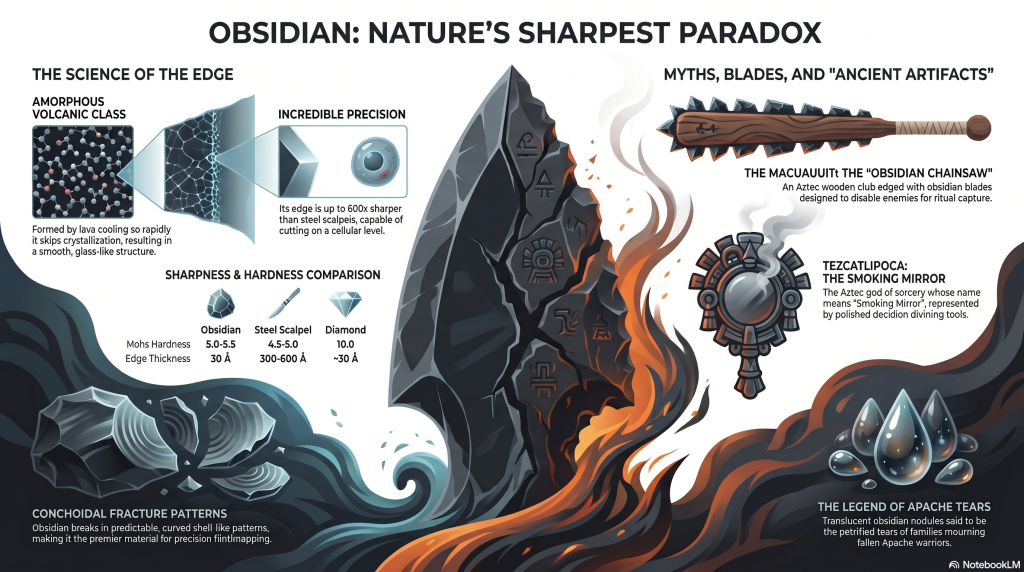
Obsidian is an igneous rock and a volcanic glass mineraloid that does not crystallize under the slow, rhythmic conditions of ordinary geological time.[1, 2, 3] Instead, it is forged in rapid thermal events, quenched so fast that its constituent atoms have no opportunity to organize into a structured crystalline lattice.[2, 3, 4] Chemically, obsidian is classified as a highly felsic volcanic glass, dominated by silicon dioxide (SiO2), which typically makes up 70% to 75%—and occasionally more than 80%—of its total weight.[1, 2, 5] It is the chemical analogue of granite and rhyolite, sharing an identical chemical composition but differing entirely in structural organization due to disparate cooling rates.[1, 6]
Continue reading “The Vitreous Frontier: A Comprehensive Analysis of Obsidian Genesis, Cultural Iconography, and Modern Techno-Scientific Applications”The Fungal Kingdom of the British Isles: An Exhaustive Survey of Edible Species, Ecological Distribution, and Foraging Protocols
1. Introduction to British Mycology and Foraging Dynamics
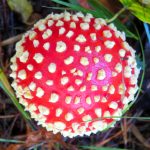
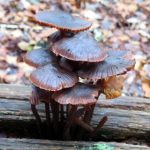
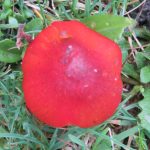
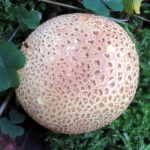
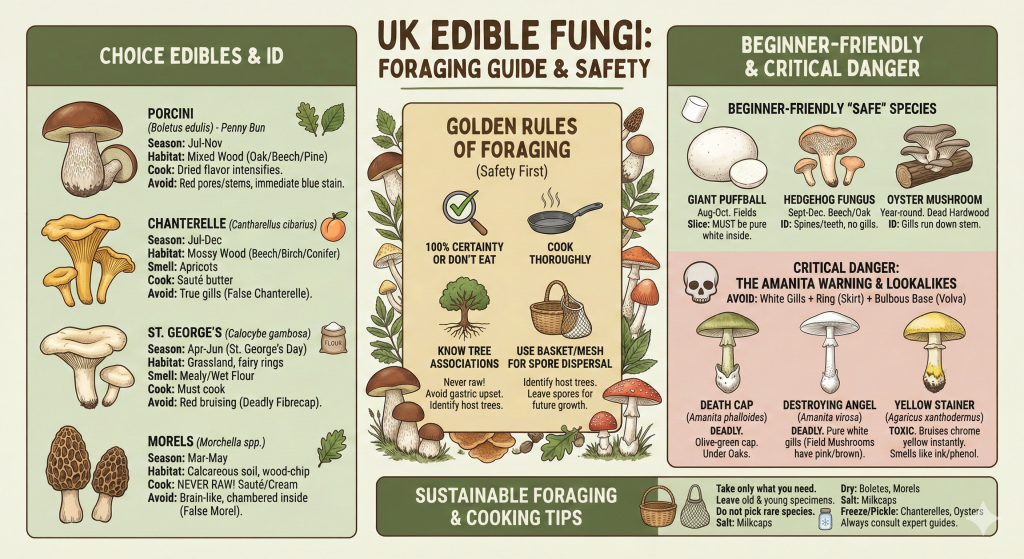
The mycological landscape of the United Kingdom presents a biological resource of immense diversity and complexity. With a temperate maritime climate characterized by mild winters, cool summers, and consistent precipitation, the British Isles support over 15,000 distinct species of fungi.1 This biodiversity is not merely of academic interest; it represents a substantial, albeit underutilized, gastronomic resource. Unlike the mycophilic cultures of continental Europe—specifically France, Italy, and Poland—the UK has historically retained a degree of “mycophobia,” viewing wild fungi with deep suspicion, a sentiment encapsulated by the catch-all pejorative “toadstool”.2 However, contemporary trends indicate a significant cultural shift. The resurgence of interest in wild food, driven by the “slow food” movement and high-profile culinary advocacy, has led to a dramatic increase in foraging activity across the UK.4
This report serves as a comprehensive technical analysis of the edible fungi of the UK. It moves beyond basic identification to explore the intricate ecological relationships that govern distribution, the biochemical profiles that dictate cooking requirements, and the rigid legal frameworks that distinguish lawful foraging from environmental crime. It is designed to equip the professional forager, ecologist, or culinary expert with the nuanced understanding required to navigate the fine line between a choice edible and a toxic lookalike.
Continue reading “The Fungal Kingdom of the British Isles: An Exhaustive Survey of Edible Species, Ecological Distribution, and Foraging Protocols”The Butterflies of the United Kingdom: A Comprehensive Ecological and Phenological Audit
1. Introduction: The State of British Lepidoptera
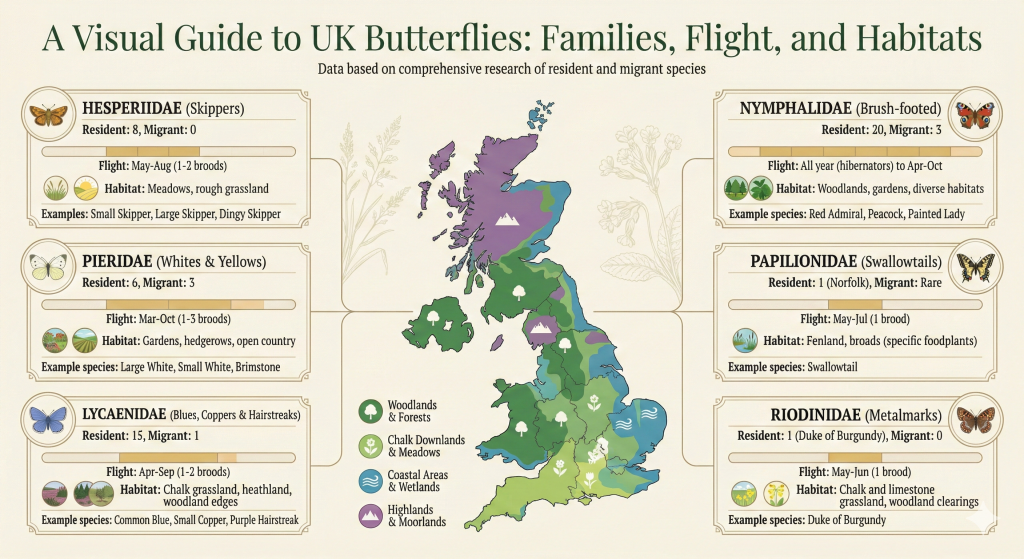
The butterfly fauna of the United Kingdom, comprising 59 resident and regularly breeding migrant species, serves as one of the most significant biological barometers for the health of the temperate terrestrial environment. While the total species count is modest compared to the high-diversity regions of southern Europe or the tropics, the British Isles host a unique assemblage of populations often existing at the extreme northwestern limits of their global ranges.1 These edge-of-range populations exhibit heightened sensitivity to environmental variables, making them critical indicators of climatic shifts, habitat fragmentation, and the ecological consequences of land-use change.
Long-term monitoring data, derived from the UK Butterfly Monitoring Scheme (UKBMS) and the Butterflies for the New Millennium (BNM) recording project, reveals a landscape of stark contrasts.3 The data indicates a distinct bifurcation in the fortunes of British butterflies. On one trajectory, generalist species—those capable of utilizing ubiquitous larval foodplants and tolerating the resource-poor matrix of the modern agricultural landscape—are largely stable or expanding their ranges northward in response to a warming climate.5 Conversely, habitat specialists—species inextricably linked to specific seral stages of woodland, precise sward heights of calcareous grassland, or complex symbiotic relationships with other invertebrates—are facing precipitous declines in both abundance and distribution.7
The ecological requirements of these species act as a lens through which the history of the British landscape can be viewed. The decline of the Pearl-bordered Fritillary tracks the cessation of traditional coppicing in ancient woodlands; the retreat of the Large Heath mirrors the drainage of peatlands; and the resurgence of the Adonis Blue reflects the successes of targeted conservation grazing on chalk downlands.
This report provides an exhaustive analysis of the 59 species currently recognized as part of the UK’s breeding fauna. Organized by biological family, the report synthesizes data on phenology (flight periods), voltinism (brood cycles), and geographical distribution. It integrates recent taxonomic revisions, such as the specific distinction of the Cryptic Wood White in Northern Ireland, and evaluates the resilience of these populations in an era of unprecedented environmental flux.
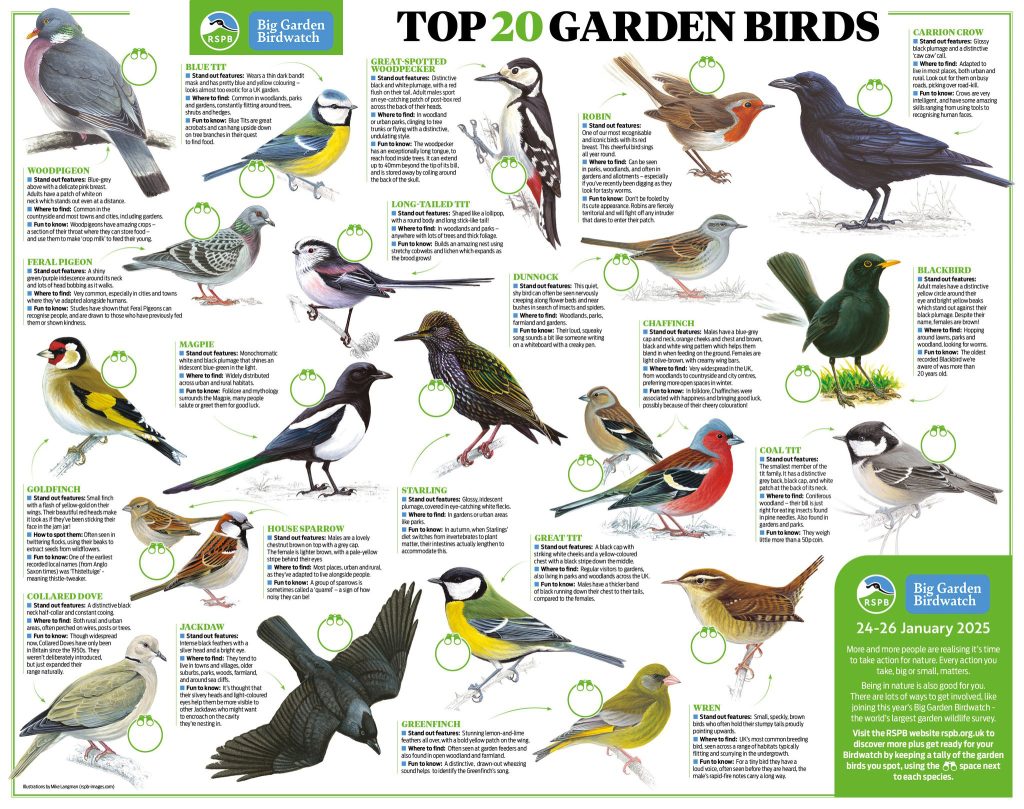
Continue reading “The Butterflies of the United Kingdom: A Comprehensive Ecological and Phenological Audit”Welcome to the British garden: a high-stakes arena of feathered drama, questionable parenting, and extreme gluttony. Based on the 2025 Big Garden Birdwatch results, here is the definitive, slightly judgmental guide to the 20 birds currently making a mess of your lawn.
The Heavyweights: The Top 5
1. House Sparrow
The Vibe: A rowdy stag do in a hedge.
The undisputed king of the rankings for 22 years running. They don’t “visit” your garden; they colonize it. Expect constant bickering over who gets the premium suet and a general disregard for your personal space.
- Fun Fact: They have been found living 2,000ft underground in coal mines. They simply refuse to leave.
2. Blue Tit
The Vibe: A caffeinated toddler in a primary-colored tracksuit.
Cute, tiny, and surprisingly violent. Historically famous for stealing the cream off the top of milk bottles, they now spend their time doing acrobatic gymnastics on your feeders while judging your choice of seed.
3. Woodpigeon
The Vibe: The “Absolute Unit” of the sky.
Essentially a flying beanbag. They are the only birds capable of making a “landing” sound like a minor aircraft crash. They will sit on a feeder designed for a finch until the laws of physics—or the metal pole—give way.
- Fun Fact: Their call sounds like they’re trying to say “My toe bleeds, Betty,” but they forgot the end of the sentence.
4. Starling
The Vibe: A punk rocker who just discovered glitter.
They arrive in a “murmuration” (read: a riot) and can strip a fat ball to the wire in 4.2 seconds. Up close, they look like a shimmering oil slick; from a distance, they look like trouble.
- Fun Fact: They are elite mimics and can perfectly imitate car alarms, just to keep you on your toes.
5. Blackbird
The Vibe: The moody goth poet of the lawn.
The males have a sleek black coat and a “don’t talk to me” yellow eye-ring. They spend 90% of their day aggressively tossing your mulch onto the patio in search of one specific, slightly superior worm.
Continue reading “Welcome to the British garden: a high-stakes arena of feathered drama, questionable parenting, and extreme gluttony. Based on the 2025 Big Garden Birdwatch results, here is the definitive, slightly judgmental guide to the 20 birds currently making a mess of your lawn.”



Black-Tailed Godwit – Titchfield Haven
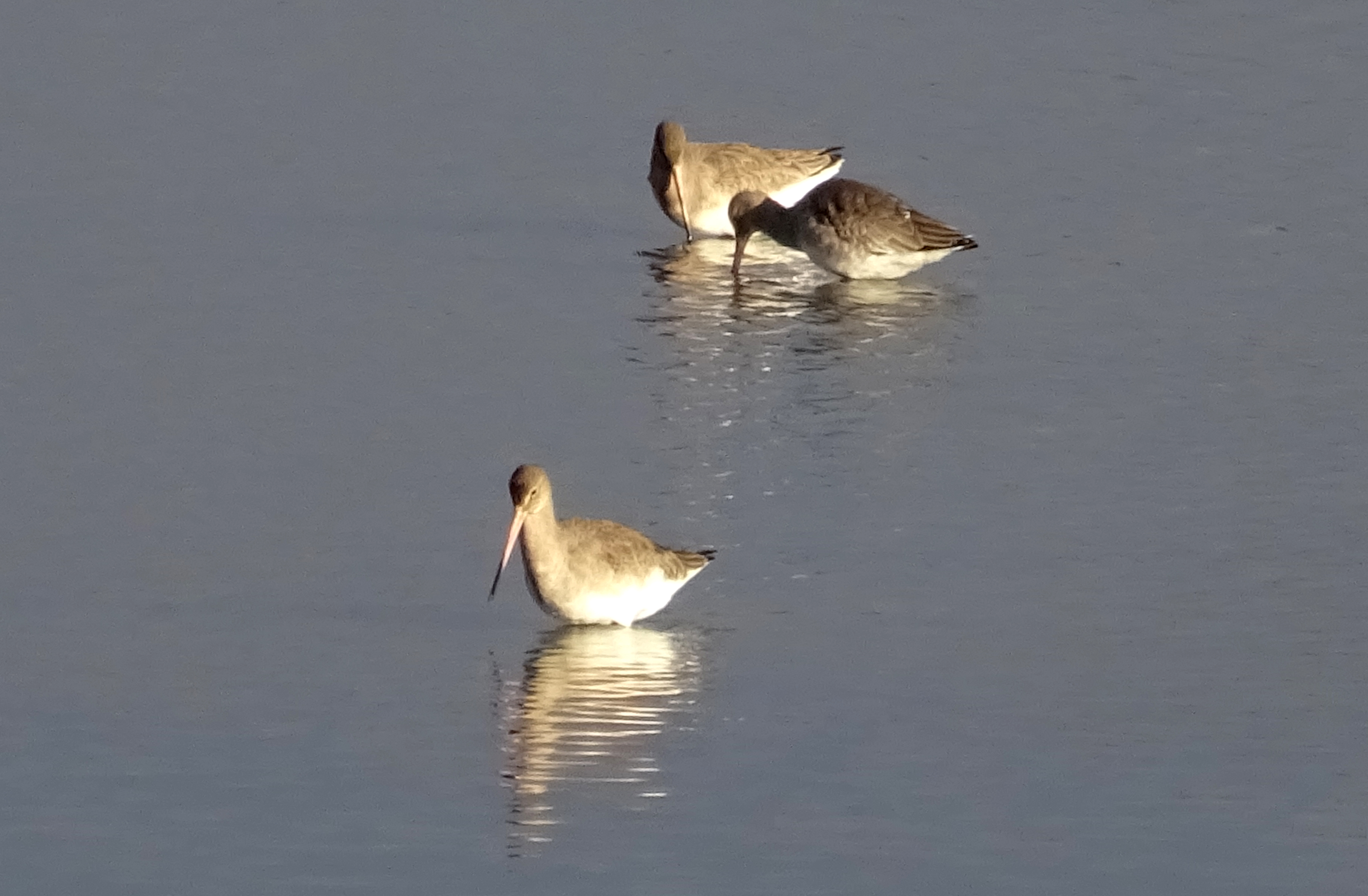
* Post generated using PerplexityAI
Black-tailed Godwits are long-distance migrants that move between northern breeding grounds and more southerly wintering areas in distinct regional flyways. Their migration strategies vary between subspecies and populations but show strong individual consistency in timing and destinations.
Breeding and winter ranges
Black-tailed Godwits breed from Iceland across north-western and central Europe into parts of central Asia, nesting in wet grasslands, damp meadows, fens, bogs and lake margins. In the non-breeding season they migrate to western Europe, the Mediterranean, West Africa, the Indian subcontinent, and as far as Australia and New Zealand, using estuaries, mudflats, swamps, floods and irrigated rice fields.
Main migration flyways
There are two main Eurasia–Africa flyways for this species: Icelandic birds mostly move south-east to winter in the British Isles, Bay of Biscay and Portugal, whereas continental European birds move south-west to winter along the coasts and wetlands of West Africa, including Senegal, Sierra Leone and Mali’s Inner Niger delta. An increasing number of continental birds now remain in Iberia for the whole winter, reflecting changing habitat and climate conditions.
Timing and distance
Godwits are classic long-distance migrants, with adults leaving breeding grounds from late summer and returning in spring, often flying several thousand kilometres with a few key staging stops. In north-west Europe, passage peaks in spring and autumn as Icelandic breeders move through to or from wintering areas in Britain, Ireland, France and Portugal.
Individual and population behaviour
Adult godwits show strong individual consistency in migration timing, routes, stopover sites and wintering grounds from year to year, even though there is wide variation among different individuals. In contrast, juveniles often depart later, show more exploratory routes and novel stopovers, and suffer higher mortality, suggesting that migratory “habits” are refined through experience and environmental learning rather than fixed solely by hatch date.
Regional differences (e.g. Dutch vs Polish)
Studies comparing Dutch and Polish breeders show that Polish birds tend to leave earlier in southward migration, make longer stopovers in southern Europe, and can change routes between years, whereas Dutch birds are more route-faithful. These differences may be driven by habitat quality and the smaller size of the Polish population, which could limit social learning from experienced migrants and promote more flexible, individualised routes.

Turnstones – Titchfield Haven

* Post generated using PerplexityAI
Main diet
During the Arctic breeding season, turnstones feed largely on adult and larval flies and midges, plus other insects such as spiders, beetles, bees and wasps. Outside the breeding season their diet broadens to include small crustaceans, molluscs, shore crabs, periwinkles and other marine invertebrates taken along rocky and sandy coasts.
Foraging techniques
Turnstones get their name from their habit of bending their legs, wedging the bill under stones, shells or seaweed, and snapping the head to flip them over, then seizing exposed prey. They also flick and plough through seaweed, pick items from rocks, sand and shallow water, chisel open shellfish, and occasionally dig in shingle, with some individuals specialising in particular methods.
Scavenging and opportunism
These birds are notable scavengers, readily picking at dead fish and mammals washed ashore and taking advantage of human food such as bread, rice and chips in harbours and seaside towns. They may raid unattended nests for eggs, and have even been recorded feeding on large carcasses, including, in rare documented cases, human corpses.
Habitat and context of feeding
On migration and in winter, turnstones concentrate along rocky coasts, harbour walls, piers and wrack-strewn strandlines where stones, shells and seaweed provide many hiding places for invertebrates. In these areas they often feed in small flocks, with dominant birds defending rich patches of seaweed or prey and subordinates pushed to less profitable spots.
Grey Heron – Titchfield Haven
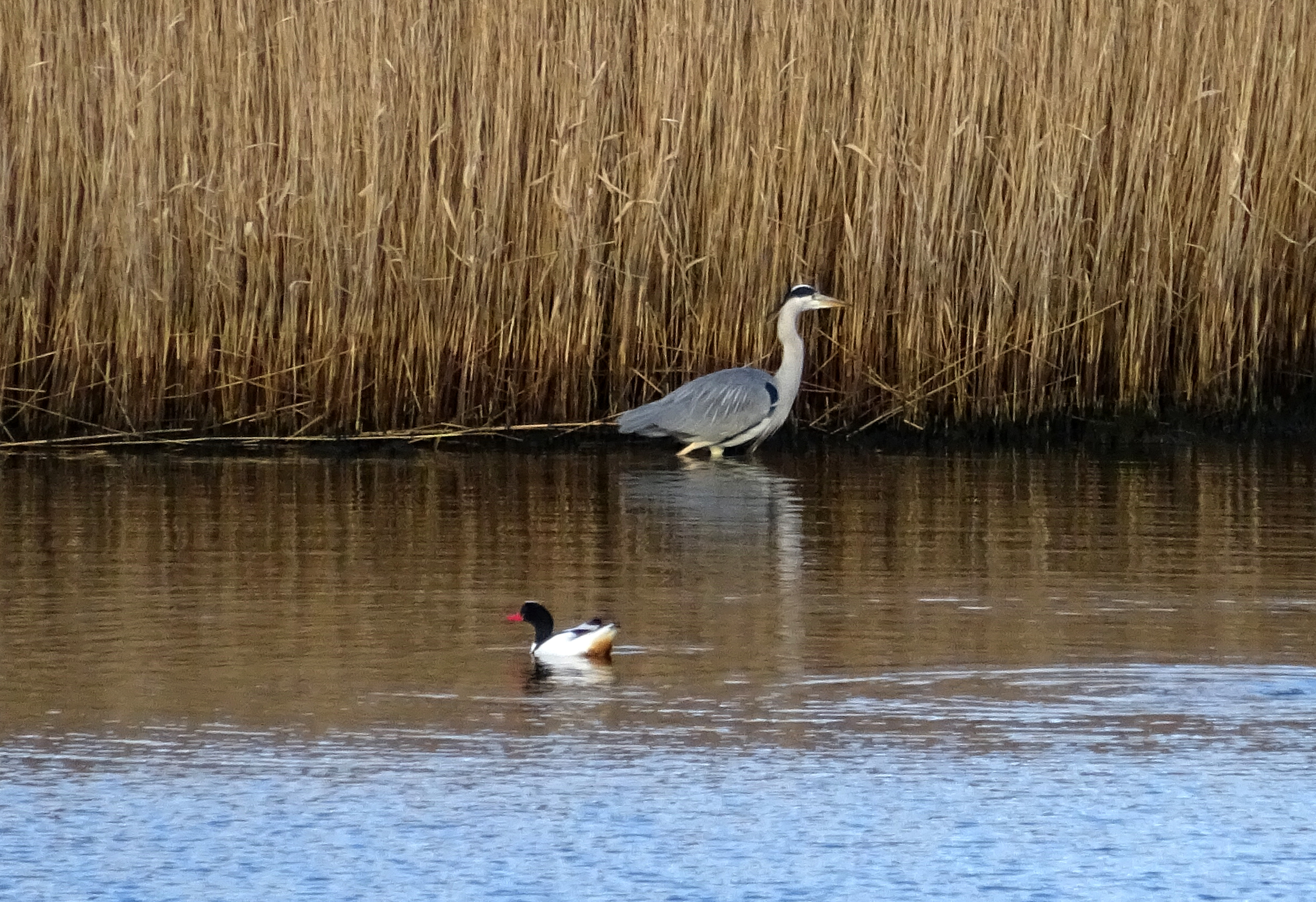
A Grey Heron skulks along the reed bed at The Haven, a Shelduck can also be seen in the foreground.
Fallow Deer – RSPB Arne
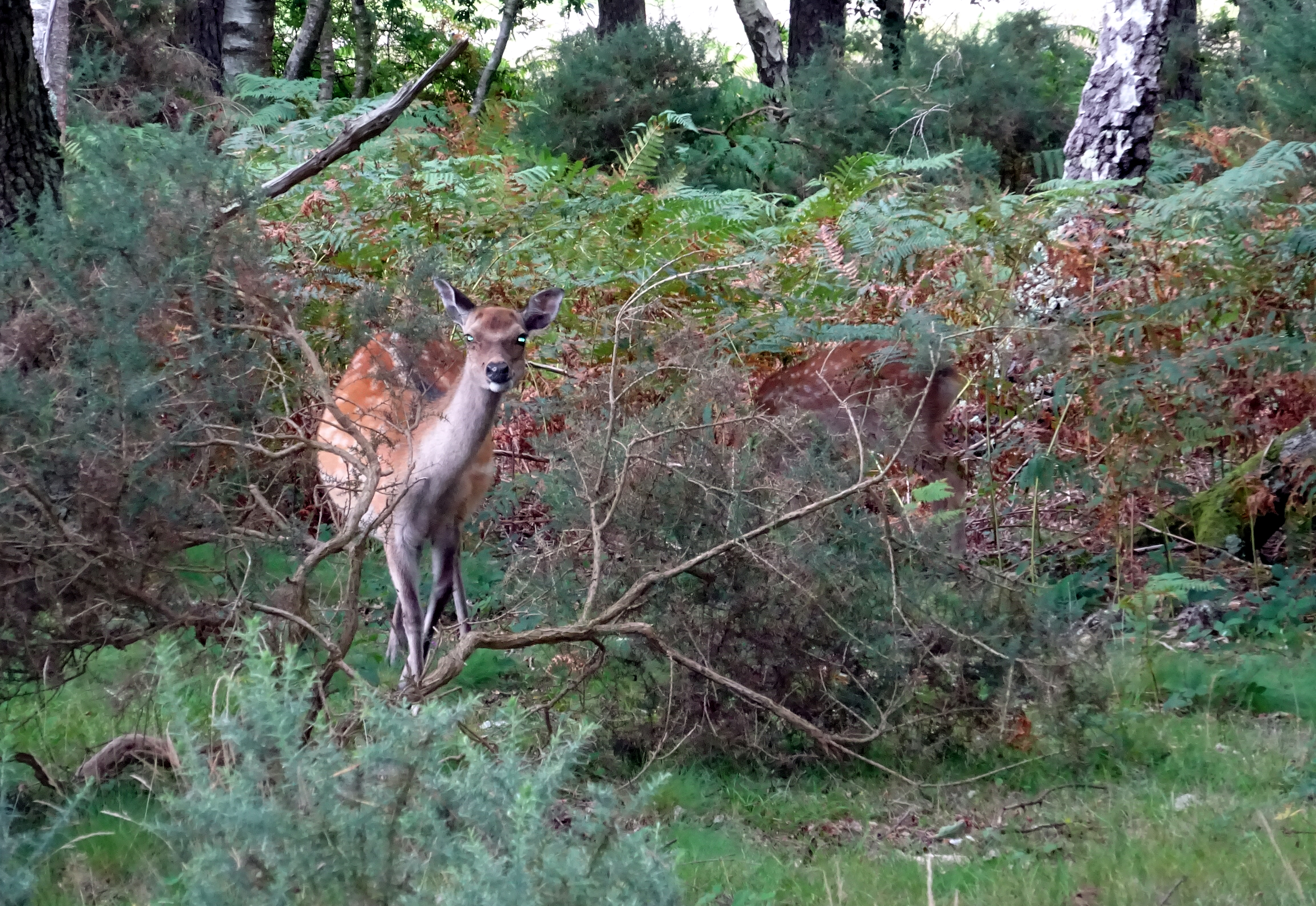
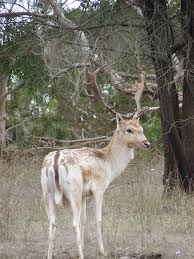
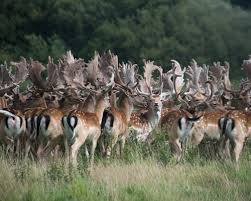
The fallow deer (Dama dama) is a medium-sized deer species known for its typically spotted coat, white rump patch outlined in black, and broad, palmate (shovel-shaped) antlers on the males (bucks).
Fallow deer are native to Europe and Anatolia, but have been widely introduced across the world, including the UK, North America, and Australia, and are considered a naturalised, widespread species in many of these regions.
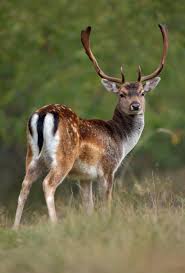
Key Characteristics
- Size: They are medium-sized deer; adult males (bucks) weigh 46–93 kg, and females (does) weigh 35–56 kg.
- Appearance: The coat color is highly variable, with four main variations:
- Common: Chestnut-brown with white spots in summer, becoming a duller grey-brown in winter.
- Menil: Paler tan color with white spots that are visible all year.
- Melanistic: Almost entirely black or dark chocolate brown with no spots.
- White: A genuine color variation, not albino, appearing almost entirely white.
They all share a distinctive white rump patch with a black, horseshoe-shaped border and a long tail with a black stripe down the middle.
- Antlers: Only bucks have antlers, which are broad and flattened (palmate) in mature individuals and are shed and regrown annually.
- Habitat: They are adaptable and thrive in broadleaved or mixed woodlands with open clearings and parklands.
Behaviour and Diet
Fallow deer are social animals, typically living in herds, though outside the breeding season (rut), bucks often form separate bachelor groups. They are active throughout the day, but peak activity occurs at dawn and dusk.
Their diet is flexible, consisting mainly of:
- Grasses and herbs.
- Leaves, bark, and young tree shoots.
- Nuts, berries, and fungi in the autumn and winter.
Reproduction
The breeding season, known as the rut, occurs in October and November. During this time, bucks establish and defend “rutting stands” (territories) by thrashing foliage and calling loudly with groans or belly belches to attract and mate with does. After a gestation period of around 230 days, a single fawn is typically born in June or July.
Status and Management
While not native to the UK, fallow deer have been present for over 1,000 years and are now naturalised and widespread, making them the most common deer in England. However, in some areas, their high populations can cause damage to forestry and agriculture, necessitating careful population management. They are also a common cause of deer-vehicle collisions.