Tag: nature-birds
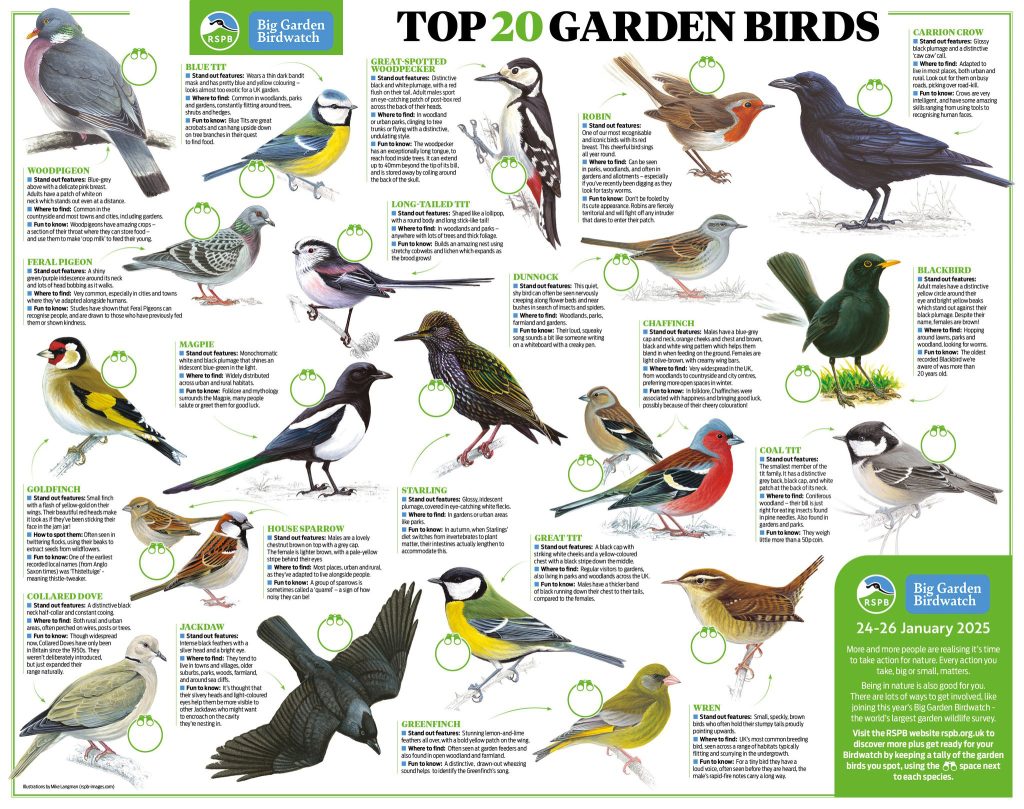
Welcome to the British garden: a high-stakes arena of feathered drama, questionable parenting, and extreme gluttony. Based on the 2025 Big Garden Birdwatch results, here is the definitive, slightly judgmental guide to the 20 birds currently making a mess of your lawn.
The Heavyweights: The Top 5
1. House Sparrow
The Vibe: A rowdy stag do in a hedge.
The undisputed king of the rankings for 22 years running. They don’t “visit” your garden; they colonize it. Expect constant bickering over who gets the premium suet and a general disregard for your personal space.
- Fun Fact: They have been found living 2,000ft underground in coal mines. They simply refuse to leave.
2. Blue Tit
The Vibe: A caffeinated toddler in a primary-colored tracksuit.
Cute, tiny, and surprisingly violent. Historically famous for stealing the cream off the top of milk bottles, they now spend their time doing acrobatic gymnastics on your feeders while judging your choice of seed.
3. Woodpigeon
The Vibe: The “Absolute Unit” of the sky.
Essentially a flying beanbag. They are the only birds capable of making a “landing” sound like a minor aircraft crash. They will sit on a feeder designed for a finch until the laws of physics—or the metal pole—give way.
- Fun Fact: Their call sounds like they’re trying to say “My toe bleeds, Betty,” but they forgot the end of the sentence.
4. Starling
The Vibe: A punk rocker who just discovered glitter.
They arrive in a “murmuration” (read: a riot) and can strip a fat ball to the wire in 4.2 seconds. Up close, they look like a shimmering oil slick; from a distance, they look like trouble.
- Fun Fact: They are elite mimics and can perfectly imitate car alarms, just to keep you on your toes.
5. Blackbird
The Vibe: The moody goth poet of the lawn.
The males have a sleek black coat and a “don’t talk to me” yellow eye-ring. They spend 90% of their day aggressively tossing your mulch onto the patio in search of one specific, slightly superior worm.
Continue reading “Welcome to the British garden: a high-stakes arena of feathered drama, questionable parenting, and extreme gluttony. Based on the 2025 Big Garden Birdwatch results, here is the definitive, slightly judgmental guide to the 20 birds currently making a mess of your lawn.”Black-Tailed Godwit – Titchfield Haven
* Post generated using PerplexityAI
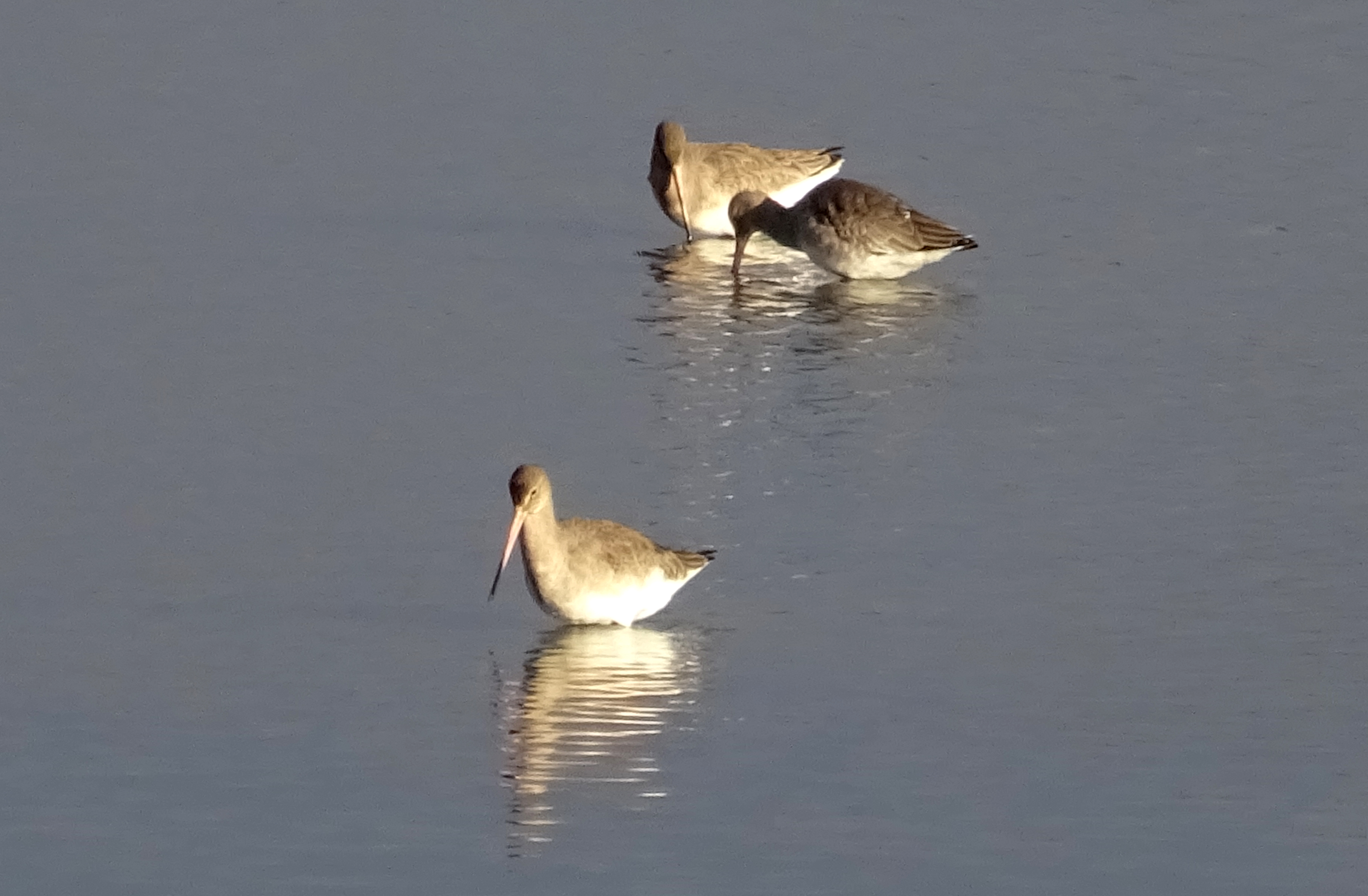
Black-tailed Godwits are long-distance migrants that move between northern breeding grounds and more southerly wintering areas in distinct regional flyways. Their migration strategies vary between subspecies and populations but show strong individual consistency in timing and destinations.
Breeding and winter ranges
Black-tailed Godwits breed from Iceland across north-western and central Europe into parts of central Asia, nesting in wet grasslands, damp meadows, fens, bogs and lake margins. In the non-breeding season they migrate to western Europe, the Mediterranean, West Africa, the Indian subcontinent, and as far as Australia and New Zealand, using estuaries, mudflats, swamps, floods and irrigated rice fields.
Main migration flyways
There are two main Eurasia–Africa flyways for this species: Icelandic birds mostly move south-east to winter in the British Isles, Bay of Biscay and Portugal, whereas continental European birds move south-west to winter along the coasts and wetlands of West Africa, including Senegal, Sierra Leone and Mali’s Inner Niger delta. An increasing number of continental birds now remain in Iberia for the whole winter, reflecting changing habitat and climate conditions.
Timing and distance
Godwits are classic long-distance migrants, with adults leaving breeding grounds from late summer and returning in spring, often flying several thousand kilometres with a few key staging stops. In north-west Europe, passage peaks in spring and autumn as Icelandic breeders move through to or from wintering areas in Britain, Ireland, France and Portugal.
Individual and population behaviour
Adult godwits show strong individual consistency in migration timing, routes, stopover sites and wintering grounds from year to year, even though there is wide variation among different individuals. In contrast, juveniles often depart later, show more exploratory routes and novel stopovers, and suffer higher mortality, suggesting that migratory “habits” are refined through experience and environmental learning rather than fixed solely by hatch date.
Regional differences (e.g. Dutch vs Polish)
Studies comparing Dutch and Polish breeders show that Polish birds tend to leave earlier in southward migration, make longer stopovers in southern Europe, and can change routes between years, whereas Dutch birds are more route-faithful. These differences may be driven by habitat quality and the smaller size of the Polish population, which could limit social learning from experienced migrants and promote more flexible, individualised routes.
Turnstones – Titchfield Haven

* Post generated using PerplexityAI
Main diet
During the Arctic breeding season, turnstones feed largely on adult and larval flies and midges, plus other insects such as spiders, beetles, bees and wasps. Outside the breeding season their diet broadens to include small crustaceans, molluscs, shore crabs, periwinkles and other marine invertebrates taken along rocky and sandy coasts.
Foraging techniques
Turnstones get their name from their habit of bending their legs, wedging the bill under stones, shells or seaweed, and snapping the head to flip them over, then seizing exposed prey. They also flick and plough through seaweed, pick items from rocks, sand and shallow water, chisel open shellfish, and occasionally dig in shingle, with some individuals specialising in particular methods.
Scavenging and opportunism
These birds are notable scavengers, readily picking at dead fish and mammals washed ashore and taking advantage of human food such as bread, rice and chips in harbours and seaside towns. They may raid unattended nests for eggs, and have even been recorded feeding on large carcasses, including, in rare documented cases, human corpses.
Habitat and context of feeding
On migration and in winter, turnstones concentrate along rocky coasts, harbour walls, piers and wrack-strewn strandlines where stones, shells and seaweed provide many hiding places for invertebrates. In these areas they often feed in small flocks, with dominant birds defending rich patches of seaweed or prey and subordinates pushed to less profitable spots.
Grey Heron – Titchfield Haven
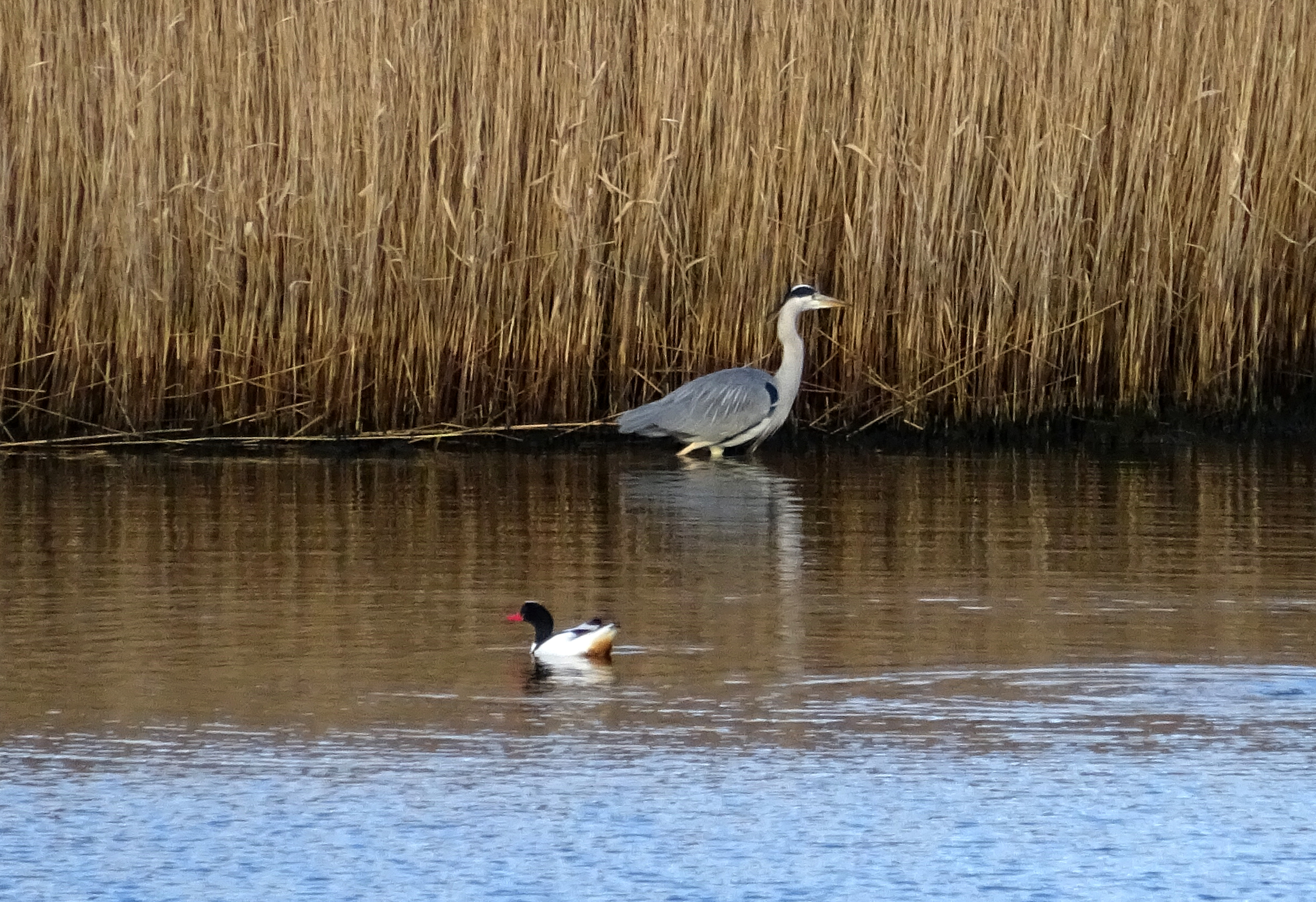
A Grey Heron skulks along the reed bed at The Haven, a Shelduck can also be seen in the foreground.