Tag: art-general
William Blake – The First Book of Urizen
As you begin your reading, it is helpful to view the narrative as a battle between Vision and Measurement. Urizen, whose name likely plays on “Your Reason” or the “Horizon” that limits our sight, seeks to impose a “solid without fluctuation” upon the void. He is the architect of the “Mathematical Form” you may have encountered in Blake’s other philosophies, arming himself with compasses and scales to quantify an existence that was once boundless. This process of categorization and law-making is depicted not as enlightenment, but as the construction of a “stony sleep,” where the human soul is gradually petrified by its own logical structures.
To truly experience this book, you must engage with it as a Prophetic Book, where text and hand-etched illustrations are inseparable. Blake’s vivid, haunting imagery, of bodies bound in chains, weeping giants, and constricting webs, is designed to provoke a physical reaction in the reader. He wants you to feel the claustrophobia of a world governed solely by rules and “one command, one joy, one desire.” As you turn the pages, watch for the moment the “Living Form” of the spirit begins to struggle against the “Mathematical” cage Urizen builds, setting the stage for a rebellion that is as much about your own imagination as it is about Blake’s mythology.
A Quick “Who’s Who” in The Book of Urizen
To navigate Blake’s complex mythology, it helps to see these characters not as literal people, but as psychological forces battling within the human mind.
1. Urizen: The Architect of Constraint
- The Concept: Cold Reason, Law, and Memory.
- The Role: He is the “Ancient of Days” who seeks to impose “One command, one joy, one desire” upon the universe. He represents the Mathematical Form, the part of us that wants to measure, categorize, and control everything to avoid the “terrible” chaos of pure creativity.
- Key Imagery: An old man with a long white beard, often shown clutching books of laws or reaching down with a giant compass to “limit” the infinite.
2. Los: The Blacksmith of Imagination
- The Concept: Creative Energy, Time, and the “Living Form.”
- The Role: When Urizen’s cold logic shatters the original unity of existence, Los is the one who tries to forge a new world out of the wreckage. He is a blacksmith who beats red-hot iron on an anvil, trying to give “shape” to the abstract ideas of Urizen so they don’t remain purely destructive.
- Key Imagery: A powerful, muscular figure working at a flaming forge with a hammer and tongs. He represents the artist’s struggle to make sense of a broken world.
3. Enitharmon: The First Shadow
- The Concept: Pity, Space, and the “Vegetated” (Material) World.
- The Role: In the trauma of creation, Los “splits” into two, and Enitharmon emerges as his female counterpart. She represents the birth of Space and the beginning of biological life. In Blake’s myth, her separation from Los marks the moment humanity becomes divided against itself, the start of “gender” and “mortality” as we know them.
- Key Imagery: Often depicted as a soft, ethereal figure, she represents the “Pity” that Los feels for Urizen’s suffering, which eventually crystallizes into the physical world.
4. Orc: The Fire of Revolution
- The Concept: Rebellion, Youth, and Energy.
- The Role: The child of Los and Enitharmon, Orc is the first “human” born into this new, restricted world. He is pure, unbridled energy, the spirit of revolution that naturally rises up against Urizen’s suffocating laws.
- Key Imagery: A youth wrapped in flames or struggling against “The Chain of Jealousy” that Los uses to bind him to a mountain.
The “Seven Deadly Sins” of Urizen, it’s important to understand that Blake isn’t talking about the traditional biblical sins like gluttony or sloth. Instead, he is describing the seven stages of the “Stony Sleep”, the process by which the human spirit is trapped inside a physical body and a logical mind.
In Chapter IV of the book, as Urizen hides in his “holiness,” his body begins to manifest as a series of restrictive “changes.” Here is how the “Mathematical Form” binds the “Living Form” into a prison of flesh:
Continue reading “William Blake – The First Book of Urizen”The Courtauld Gallery: A Treasure Trove of Impressionist and Post-Impressionist Art
* Post generated using Gemini AI
The Courtauld Gallery is one of London’s must-visit art museums, renowned for its exceptional collection of Impressionist and Post-Impressionist paintings. Located in the heart of London at Somerset House, the gallery is housed in a magnificent 18th-century building. It is a part of The Courtauld Institute of Art, a self-governing college of the University of London specializing in the study of the history of art and conservation.
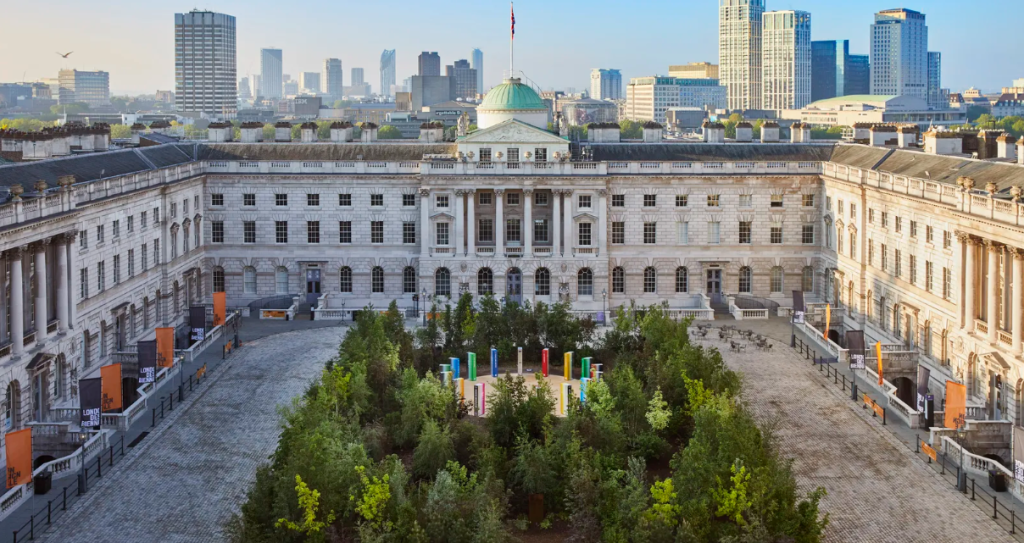
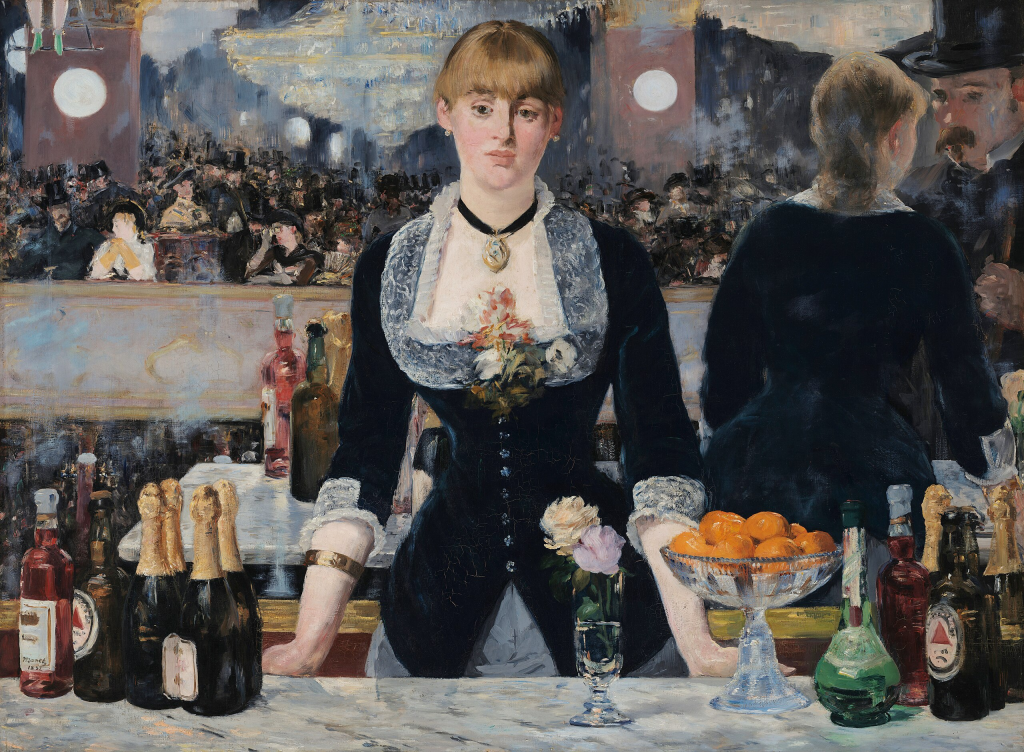
At the heart of the Courtauld’s collection are its masterpieces of Impressionism. The gallery holds an unparalleled selection of works by artists who defined the movement. A prime example is Édouard Manet’s enigmatic final major work, A Bar at the Folies-Bergère. This painting is famous for its complex composition, including a barmaid whose reflection in the mirror behind her seems to contradict her real-world presence, offering a fascinating glimpse into the Parisian nightlife of the era.
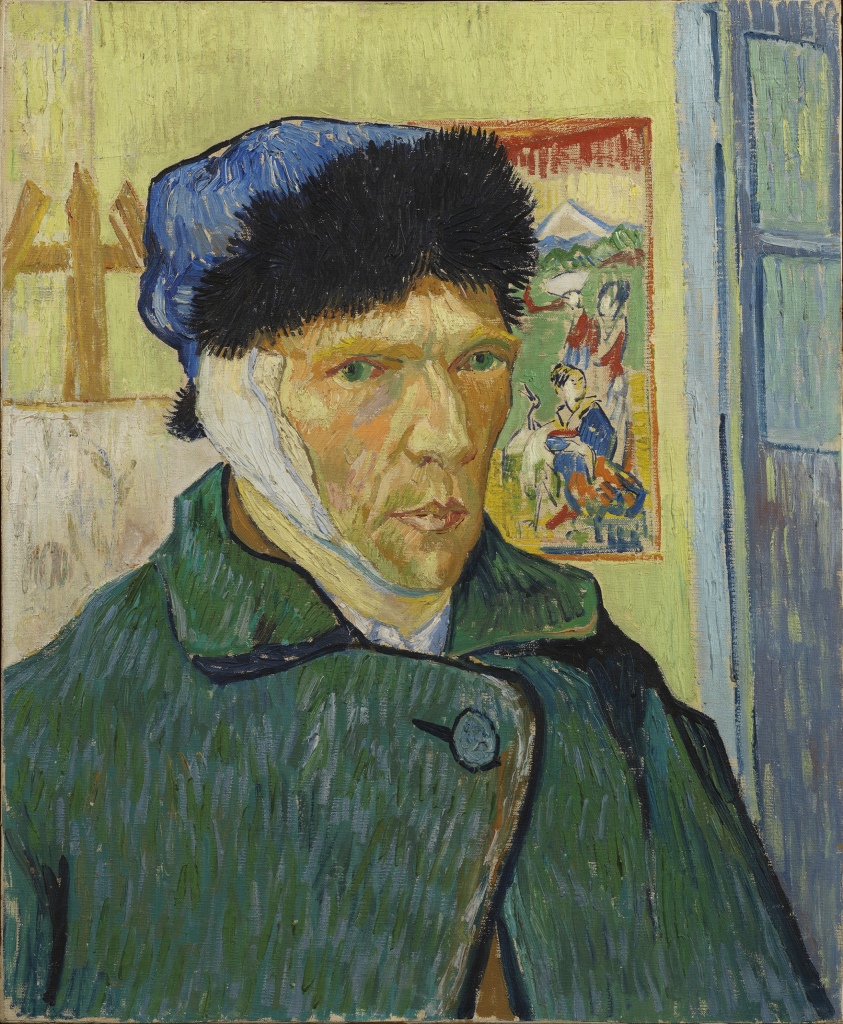
Moving beyond Impressionism, the gallery’s Post-Impressionist collection is equally significant, featuring iconic works that paved the way for modern art. Among the most powerful pieces is Vincent van Gogh’s Self-Portrait with Bandaged Ear. Painted shortly after he tragically severed a part of his own ear, this intense and deeply personal portrait is a testament to the artist’s emotional turmoil and his unique, expressive style.
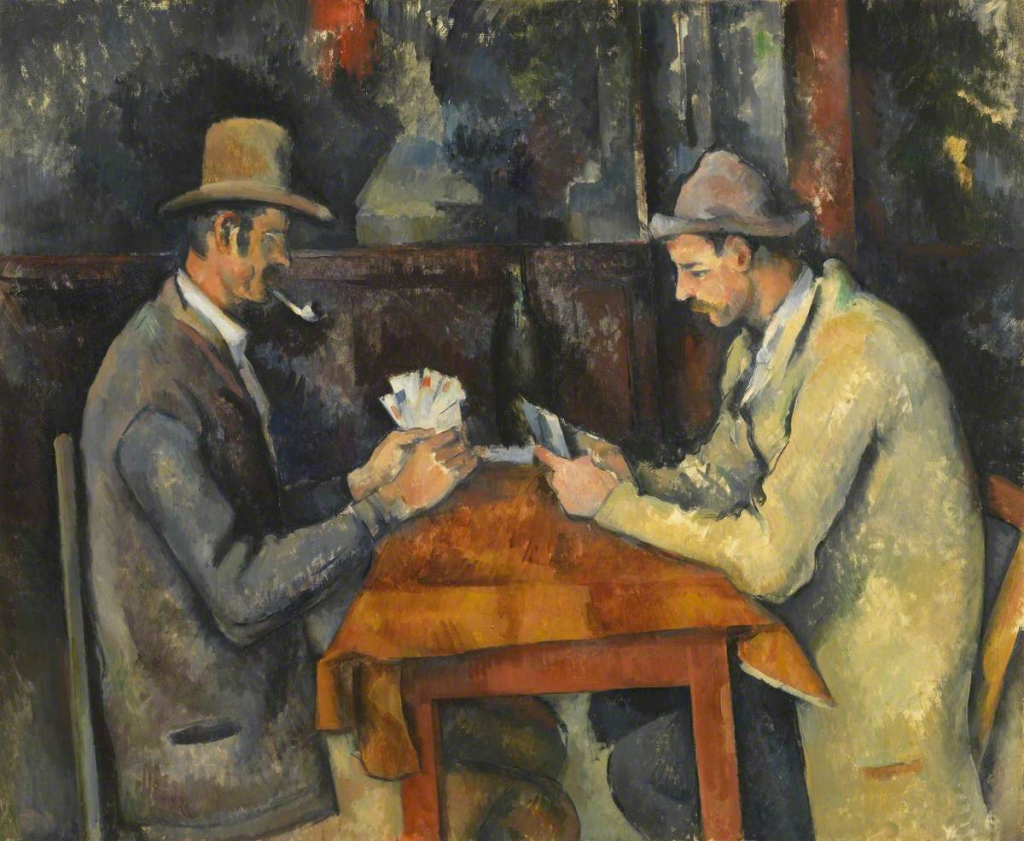
The gallery’s collection is not limited to these two movements, but they form its core. Another highlight is the work of Paul Cézanne, often called the “father of modern art”. The Courtauld holds the finest collection of his work in the UK, including one of the famous paintings from his The Card Players series. These works, with their geometric forms and structural brushwork, were instrumental in the development of Cubism.
In addition to its painting collection, the Courtauld Gallery also holds an impressive array of drawings, prints, and sculpture, from the Renaissance to the 20th century. Its commitment to education and research makes it a vital center for the study and appreciation of art history, offering a rich experience for visitors and scholars alike.
Achilles Shield – British Gallery “Troy” Exhibition

A representation of Achilles Shield, this exhibit was included in the recent “Troy” exhibition at the British Gallery, 2020.